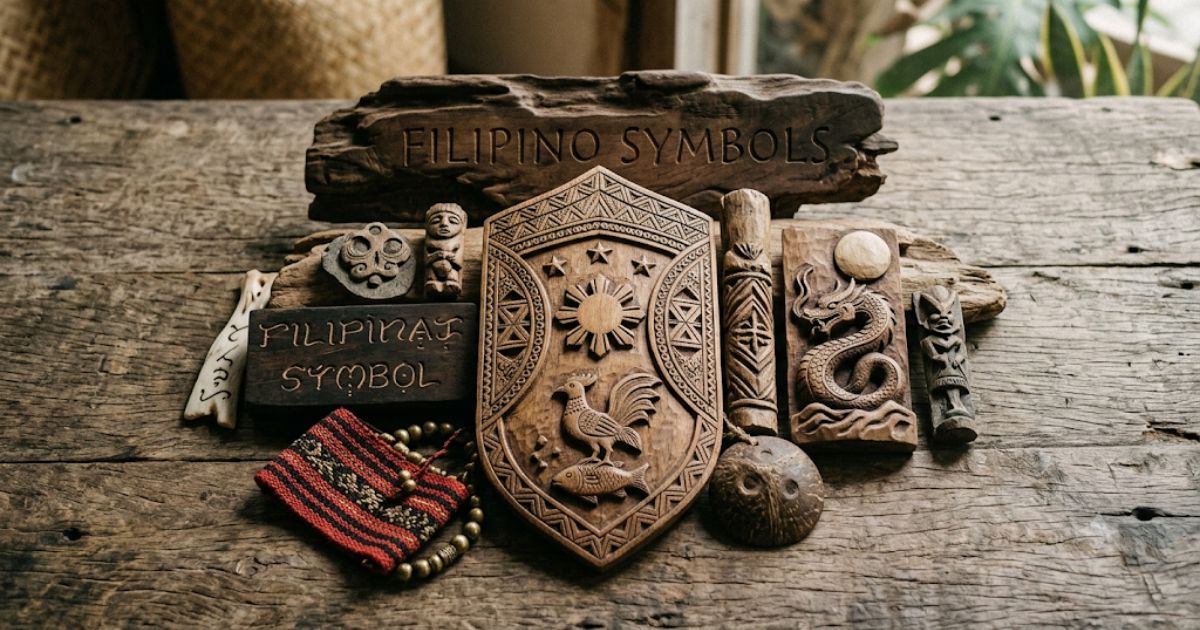
55+ Mysterious Filipino Symbols and Their Hidden Meanings You’ve Never Noticed
Filipino symbols carry centuries of meaning inside them. From tribal tattoos to ancient scripts, each symbol tells a story about who Filipinos are, where they come from, and what they believe.
Whether you are a student, a researcher, or someone proud of Filipino roots, this guide covers every major Filipino symbol with clear, honest information.
What Are Filipino Symbols?
Filipino symbols are visual marks, designs, and images that carry cultural, spiritual, or national meaning for the people of the Philippines. These symbols come from different time periods: some are pre-colonial, some were shaped by Spanish rule, and others reflect modern Filipino identity.
They appear in flags, tattoos, architecture, clothing, writing systems, and everyday life. Understanding Filipino symbols helps you understand the soul of an entire people.
Filipino Cultural Symbols And Their Meanings
Filipino cultural symbols blend nature, spirituality, history, and community. Each one carries a layer of meaning that connects past and present generations.
Filipino symbols and meanings
Filipino symbols hold meaning on many levels. The sun represents freedom and energy. Waves stand for the sea that surrounds the islands. Eagles mean power and independence. Together, these Filipino symbols create a visual language that speaks louder than words.
Filipino flag
The Philippine flag is one of the most recognized Filipino symbols in the world. It has three colors: blue for peace and justice, red for courage, and white for equality and purity. The golden sun at the center has eight rays, each representing one of the first provinces that revolted against Spanish rule. Three stars stand for the three main island groups: Luzon, Visayas, and Mindanao.
Filipino symbols tattoos

Filipino symbol tattoos connect people to their ancestry. Ancient warriors used tribal markings to show status, bravery, and spiritual protection. Common designs include the sun, spear patterns, ocean waves, and geometric shapes. Today, these tattoos are a way to honor heritage and keep traditional art alive.
Filipino symbols letters
Filipino symbol letters refer mainly to Baybayin, the ancient writing system of the Philippines. Each character in Baybayin represents a syllable, not a single letter. People use these characters in tattoos, artwork, and modern design to celebrate pre-colonial Filipino identity.
Philippines symbols and meanings
Philippines symbols include both national and cultural markers. The flag, eagle, narra tree, and sampaguita flower each represent a different value: independence, strength, resilience, and humility. These symbols are taught in schools to build national pride and awareness.
National Symbols Of The Philippines

The Philippines has a defined set of official national symbols recognized by law. Here is a complete overview.
| Symbol | Category | Meaning |
| Philippine Flag | National Flag | Peace, courage, equality, freedom |
| Philippine Eagle | National Bird | Strength, independence |
| Narra Tree | National Tree | Resilience, stability |
| Sampaguita | National Flower | Purity, humility, devotion |
| Philippine Pearl | National Gem | Beauty, rarity |
| Arnis | National Sport | Discipline, warrior spirit |
| Carabao | National Animal | Hard work, agriculture |
| Anahaw | National Leaf | Peace, resilience |
| Mango | National Fruit | Abundance, sweetness |
| Barong Tagalog | National Costume | Elegance, Filipino identity |
What are the 10 national symbols of the Philippines
The 10 key national symbols are: the flag, coat of arms, national anthem, the Philippine eagle, narra tree, sampaguita flower, Philippine pearl, arnis, Filipino Sign Language, and the carabao. Some are official by law; others are recognized through tradition and presidential proclamation.
Philippine national symbols PDF
Philippine national symbols are documented in the Flag and Heraldic Code (Republic Act 8491) and related proclamations. These documents are available on the Official Gazette website of the Philippines and educational platforms for teachers and students.
Philippines national bird
The Philippines national bird is the Philippine Eagle (Pithecophaga jefferyi). It is one of the largest eagles in the world and is critically endangered. President Fidel Ramos declared it the national bird in 1995 through Proclamation No. 615. It represents the strength and freedom of the Filipino people.
Philippine national symbols with pictures and description
Educational materials featuring pictures of Filipino symbols are widely used in Philippine schools. Visual guides help students connect images with meaning, making cultural learning more effective and engaging.
National tree of the Philippines

The Narra tree is the national tree of the Philippines. Its wood is strong, termite-resistant, and rose-scented. The Narra represents the strength and stability of the Filipino character. A special permit is required to cut down a Narra tree because of its protected status.
Ancient And Traditional Filipino Symbols
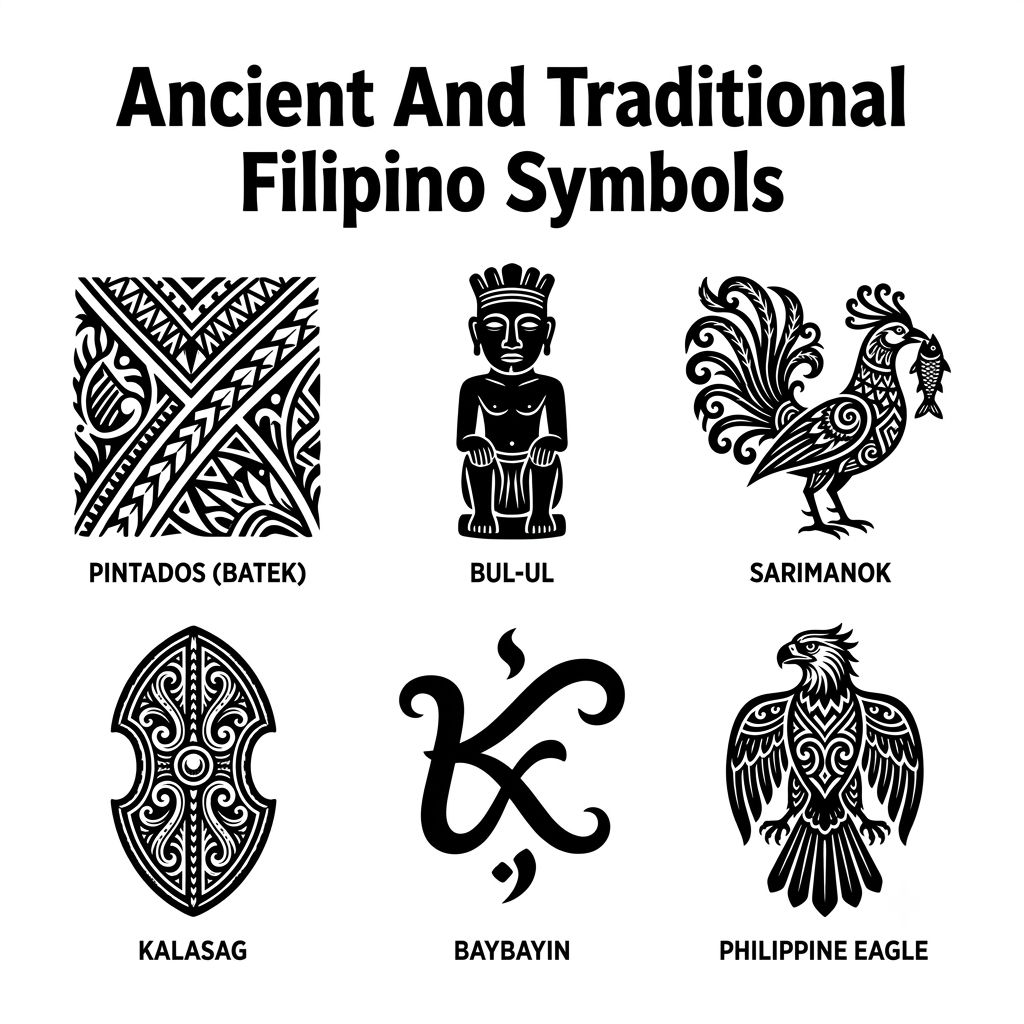
Long before Spanish colonizers arrived, Filipinos had a rich system of ancient symbols rooted in nature, spirituality, and community life.
Ancient Filipino symbols
Ancient Filipino symbols came from animism, the belief that nature holds spiritual power. Mountains, rivers, animals, and the sun all carried sacred meaning. Rituals, carvings, and early tattoos preserved these symbols across generations.
Filipino symbolism
Filipino symbolism runs deep. A river is not just water; it is life and transition. A bird is not just an animal; it carries messages between the living and the spirit world. This layered thinking shapes how Filipinos see symbols even today.
Traditional Filipino symbols
Traditional Filipino symbols include the sun, ocean waves, mountain peaks, the Sarimanok bird, Baybayin characters, and Okir patterns. These appear in weaving, pottery, woodwork, and body art across different ethnic groups.
Filipino good luck symbols
Good luck Filipino symbols include the Sarimanok (fortune and prosperity), the carabao (abundance), and certain Baybayin characters used as protective charms. Anting-anting amulets are also widely recognized as protective and lucky symbols in Filipino folk tradition.
Filipino ancient symbols
Filipino ancient symbols were tied to the babaylan, the spiritual leaders of pre-colonial communities. Symbols carved into objects or worn on the body were believed to carry spiritual power and offer protection from harm.
Filipino indigenous symbols
Indigenous Filipino symbols vary by ethnic group. The Kalinga use batok tattoos with geometric patterns. The Maranao use the Sarimanok and Okir designs. The Ifugao use rice terraces as a living symbol of culture and sustainability. Each group has its own visual language.
Filipino protection symbols
Filipino protection symbols include the anting-anting, a charm believed to protect the wearer from evil. Kalasag, the traditional shield, is also a symbol of protection. Certain Baybayin inscriptions were used as protective prayers in ancient times.
Filipino Symbols Of Identity, Culture And Strength
Some Filipino symbols go beyond national pride and speak directly to personal and community identity.
Family Filipino symbols and meanings
Family is the core of Filipino life. Symbols that represent family include the bayanihan image (community members lifting a house together), the Sampaguita garland (given as a token of love and respect), and the carabao (shared labor and interdependence).
Filipino symbols for strength
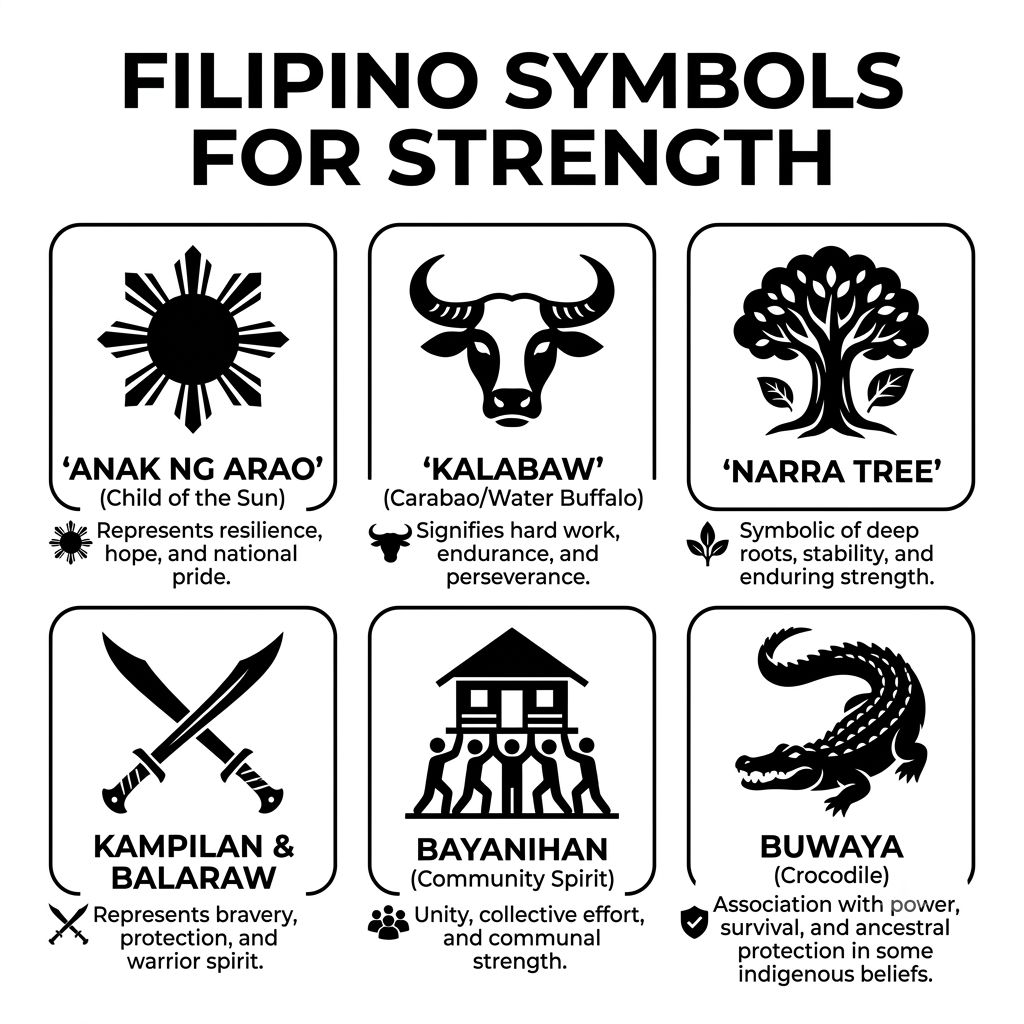
The Philippine Eagle is the strongest Filipino symbol. Other strength symbols include the warrior tattoo patterns of the Visayas, the kampilan sword, and the Narra tree, which cannot be broken by termites or time.
Symbols that represent Filipino culture
Symbols that represent Filipino culture include the jeepney (ingenuity and adaptability), the bahay kubo (simplicity and closeness to nature), the parol lantern (faith and Christmas spirit), and the abaniko fan (grace and tradition).
Filipino culture symbols
Filipino culture symbols include a wide range, from the national to the personal. The flag, the Sarimanok, the carabao, and Baybayin script all come together to form a picture of who Filipinos are as a people.
Filipino symbols culture
Filipino culture is visible in every symbol. Even everyday objects like the Barong Tagalog (national men’s dress) and the parol (Christmas lantern) carry cultural meaning and pride.
Indigenous Filipino symbols
Indigenous Filipino symbols are among the richest in Southeast Asia. From Mindanao’s Okir carvings to the Cordillera’s rice terraces, these symbols belong to specific communities and tell stories of survival and tradition.
Symbols of Filipino identity
Symbols of Filipino identity include Baybayin script, the national flag, the jeepney, and traditional tribal tattoos. These symbols say: this is who we are, and we remember where we came from.
Symbols of Filipino culture
Symbols of Filipino culture reflect values like family (pamilya), community (bayanihan), faith (pananampalataya), and resilience (lakas ng loob). Each symbol is a window into the Filipino way of life.
More Ancient And Cultural Filipino Symbols
Ancient Filipino symbols and meanings
| Symbol | Origin | Meaning |
| Sarimanok | Maranao (Mindanao) | Good fortune, protection |
| Baybayin | Pre-colonial Philippines | Identity, literacy, pride |
| Okir | Mindanao Islamic culture | Life force, continuity |
| Batok | Kalinga tribe | Protection, achievement |
| Anting-anting | National folk tradition | Luck, spiritual protection |
| Anito | Indigenous animism | Ancestor spirit, guidance |
Filipino cultural symbols
Filipino cultural symbols include both official national icons and community-based artistic traditions. Together they form a rich mosaic that reflects the diversity of over 7,000 islands.
Ancient Filipino symbols for strength
Warrior symbols from ancient tribes are the clearest examples of strength Filipino symbols. The kalasag shield, the kampilan sword, and the batok tattoo of the Kalinga people all represent courage in the face of danger.
Filipino symbols for family

Family Filipino symbols include the bayanihan spirit, garlands of sampaguita, and the image of the bahay kubo surrounded by family. These symbols show that in Filipino culture, no one stands alone.
Traditional Filipino symbols and meanings
Traditional symbols like Baybayin, the Sarimanok, and Okir patterns all carry meanings of identity, community, and spiritual connection. They were created before colonization and have survived into the modern era.
Old Filipino symbols for strength
Old Filipino symbols for strength come from warrior culture. Painted body markings in Visayan communities called patik marked the number of battles a warrior survived. The more markings, the greater the respect.
Tagalog family Filipino symbols and meanings
In Tagalog tradition, the family is symbolized through shared rituals, food, and space. The altar inside the home (dambana) and communal meals during fiestas are living symbols of family unity in Tagalog culture.
Common Filipino symbols
Common Filipino symbols seen in everyday life include: the sun, the three stars, the Sarimanok, the sampaguita, the carabao, the parol, and Baybayin letters. These appear on products, logos, art, and government documents across the Philippines.
Filipino symbols and practices
Filipino symbols are deeply tied to practice. The ritual of offering flowers to anito figures, wearing anting-anting for protection, and tattooing tribal patterns are all practices that give symbols their living meaning.
Warrior Filipino symbols
Warrior Filipino symbols include the batok tattoo, the kampilan sword, the kalasag shield, and the babaylan staff. These were used by fighters, leaders, and spiritual guides in ancient Filipino communities.
Philippine Filipino symbols
Philippine Filipino symbols are recognized both locally and internationally. The flag’s sun design, the Sarimanok, and Baybayin script are among the most globally known Filipino symbols today.
Ilocano ancient Filipino symbols and meanings
Ilocano symbols often appear in weaving patterns called Abel cloth. Geometric shapes and nature-inspired designs in these textiles represent harvest, community, and the connection between humans and the earth.
Deep Symbolic Meaning of Filipino Symbols
Spiritual Level
On a spiritual level, Filipino symbols connect the living to ancestors and nature spirits. The anito figures represent guardians of the spirit world. The babaylan used symbols in healing rituals and prayers for community protection. Even today, many Filipinos wear anting-anting charms as a spiritual shield.
Psychological Level
Filipino symbols offer emotional grounding. They remind people of home, family, and belonging. For Filipinos living abroad, symbols like the flag, Baybayin letters, or tribal tattoos provide a psychological anchor to identity and culture. They say: you are still part of this people.
Cultural Level
Culturally, Filipino symbols teach values. The carabao teaches hard work. The Sampaguita teaches humility. The Philippine Eagle teaches pride without arrogance. These symbols are embedded in education, art, and daily life to pass cultural wisdom from one generation to the next.
Types and Variations of Filipino Symbols
Sarimanok
The Sarimanok is a legendary bird from Maranao mythology in Mindanao. It is depicted with colorful wings and a fish in its beak. The name combines “sari” (assorted colors) and “manok” (bird). It represents good fortune, prosperity, and spiritual protection. It appears in carvings, textiles, and even university seals across the Philippines.
Sun and Stars of the Philippine Flag
The sun on the Philippine flag has eight rays, one for each province that rose against Spanish rule. The three stars represent Luzon, Visayas, and Mindanao. This design is one of the most meaningful Filipino symbols because it tells the entire independence story in a single image.
Anito Figures
Anito figures are wooden or stone carvings believed to house the spirits of ancestors or nature beings. They were used in pre-colonial rituals and placed in homes and sacred spaces. Anito figures represent the Filipino belief in the continued presence of ancestors in daily life.
Okir Patterns
Okir is a decorative motif from Mindanao’s Islamic communities. It features flowing plant-based curves and spirals carved into wood, metal, and stone. Okir represents the life force that flows through all living things. It is found on houses, boats, musical instruments, and traditional crafts.
Baybayin Script
Baybayin is the ancient writing system of the Philippines, used before Spanish colonization. It has 17 characters, each representing a syllable. When Spanish priests arrived in the 1500s, they found that most Filipinos could already read and write using Baybayin.
Today, it appears on Philippine currency, passports, and government seals as a symbol of pre-colonial identity.
READ MORE: 119+ Spiritual Symbols and Meanings Explained
Filipino Symbols Across Cultures
Filipino symbols share roots with other Southeast Asian cultures. Indonesian and Malaysian motifs show similar wave patterns, bird figures, and nature-based designs, reflecting ancient trade and migration routes. In Hawaii and other Pacific communities, Filipino tattoo traditions overlap with Polynesian practices. Globally, the Filipino diaspora has spread these symbols into Western art, fashion, and design, where they serve as markers of identity and resistance to cultural erasure.
Filipino Symbols in Art, Movies and Pop Culture
Filipino symbols appear across creative media. Painters like Fernando Amorsolo used sun-drenched rural scenes as cultural symbols of Filipino life. In film, directors use color, setting, and folklore to embed symbolic meaning without saying a word. The parol lantern appears in Christmas films. The carabao and bahay kubo appear in folk songs and children’s literature. In pop culture, Filipino symbols are worn in tattoos and fashion by both local and overseas artists who want to celebrate their roots. The Sarimanok and Baybayin characters now appear on streetwear, sneakers, and modern art installations worldwide.
Spiritual and Dream Meaning of Filipino Symbols
Dreaming of Filipino symbols often carries personal or spiritual significance. Dreaming of an eagle may mean strength is coming. Dreaming of the sun signals hope and new beginnings. In folk belief, dreaming of the Sarimanok is considered a very good omen of prosperity ahead.
Anito figures in dreams may represent a message from an ancestor. Many Filipinos take these dream symbols seriously and see them as guidance from the spirit world, a practice rooted deeply in pre-colonial animist traditions.
Positive vs Negative Meaning
Most Filipino symbols carry positive meanings, but some have dual interpretations.
| Symbol | Positive Meaning | Negative/Cautionary Side |
| Philippine Eagle | Strength, pride | Endangered, warns of lost nature |
| Anting-anting | Protection, luck | Fear of dark spiritual forces |
| Warrior tattoo | Courage, identity | Reminder of colonial trauma |
| Anito figure | Ancestor connection | Misunderstood as idol worship |
| Sun | Freedom, energy | Overexposure to power can blind |
Symbols are mirrors. What you see in them often reflects where you stand culturally and spiritually.
Why Humans Are Attracted to Filipino Symbols
People are drawn to Filipino symbols because they are beautiful, layered, and deeply human. They carry real stories, not invented ones. They connect to nature, family, faith, and survival. In a world full of noise, a symbol offers silence with meaning.
For Filipinos, these symbols are not decorative. They are declarations: of heritage, of pride, and of the refusal to be forgotten. For non-Filipinos, these symbols offer a window into a culture that is warm, complex, and ancient.
Conclusion
Filipino symbols are far more than art or decoration. They are living records of a people who survived colonization, maintained their culture, and continue to express identity through image and form. From the ancient Baybayin script to the Sarimanok bird, from the warrior tattoos of the Kalinga to the golden sun on the national flag, each Filipino symbol carries history, emotion, and purpose.
Learning these symbols is a way to respect and understand Filipino culture at its deepest level. Whether you are Filipino or simply curious, these symbols deserve your attention.

Ethan Brooks is a writer and researcher at TechTimeGP, sharing clear and informative guides about symbols, signs, and their meanings. He explores the history, cultural significance, and modern uses of different symbols to help readers understand the stories behind them. His goal is to make symbol meanings simple, accurate, and easy for everyone to discover.