
83+ Best Hand Symbols and Their Hidden Meanings Explained in 2026
Hand symbols are one of the most powerful and universal forms of human communication. From ancient cave walls to modern social media, people have used hand signs to express identity, emotion, belief, and power.
This guide covers every major type of hand symbol, including spiritual, cultural, religious, and modern meanings, so you can understand what each one truly represents.
What Are Hand Symbols?

Hand symbols are meaningful gestures or images of hands used to communicate ideas, emotions, or beliefs without words. They appear in ancient art, religious traditions, street culture, and digital life. A single hand symbol can carry multiple meanings depending on culture and context.
Thousands of years ago, early humans pressed painted hands onto cave walls as a mark of identity and presence. Over time, hand symbols became part of religion, royalty, and daily communication. Today, they appear as emojis, tattoos, jewelry, and sacred art.
Hand Symbols And Meanings Guide
Understanding hand symbols and meanings requires looking at both history and context. The same gesture can mean something completely different depending on where and how it is used.
Hand Symbols And Meanings
Hand symbols and meanings vary across time and culture. An open hand can represent peace, generosity, or blessing. A closed fist can mean strength, resistance, or protest. Every hand symbol carries a layered meaning shaped by its origin.
Hand Symbol Meanings
Hand symbol meanings are rarely fixed. Context always changes the message. A raised palm means stop in one country and welcome in another.
Hand Symbol Meaning
The core hand symbol meaning often connects to protection, power, or communication. Most hand signs were created to express something that words could not fully capture.
Hand Symbol Meaning Spiritual
The spiritual hand symbol meaning goes deeper than gesture. In many traditions, the hand is seen as a channel of divine energy. Healers use their hands. Priests bless with their hands. Saints are painted with hands raised toward God.
Hand Symbol

A hand symbol is any image or gesture of a hand that carries cultural, spiritual, or social meaning. They exist in every civilization, religion, and era of human history.
Hand Symbolism
Hand symbolism connects the physical act of touching to emotional and spiritual meaning. According to Aristotle, the hand is the tool of all tools. It builds, protects, gives, and communicates.
Hand Symbolism Meaning
Hand symbolism meaning covers a wide range: power, blessing, healing, protection, friendship, and divine connection. The right hand often represents logic and authority. The left hand is linked to intuition and emotion.
Hands Symbolism
Hands symbolism in art and religion shows two hands clasped as peace, one hand raised as an oath, and both hands open as generosity. Together, hands tell the full story of human expression.
What Do Hands Symbolize?
Hands symbolize strength, protection, creativity, and connection. They are the tools we use to build the world around us, and the symbols we use to communicate beyond words.
What Do Hands Represent?
Hands represent action, identity, and relationship. In dreams, seeing a hand often points to a person’s ability to create or control their situation.
What Does The Hand Symbol Mean?
The hand symbol means different things in different settings. Generally, it represents human presence, power, or intention. Hand symbols are among the oldest and most recognized signs in history.
What Does A Hand Represent?
A hand represents connection between people and between humans and the divine. It is a bridge between the physical and spiritual world in nearly every culture on earth.
Symbolism Of Hands

The symbolism of hands has been studied by art historians, anthropologists, and theologians for centuries. Hands appear in every major religious text and sacred artwork as symbols of divine authority and human capacity.
Hand Gestures And Modern Meanings
Modern hand symbols and gestures have evolved far beyond their ancient roots. Today, they appear in everyday life, online communication, and pop culture. Understanding these hand signs helps people communicate with confidence and avoid cultural misunderstandings.
Hand Gestures Meaning With Pictures
| Gesture | Common Meaning |
| Thumbs up | Approval, agreement |
| Peace sign (V) | Peace, victory |
| OK sign | Everything is fine |
| Raised fist | Solidarity, protest |
| Open palm | Stop, greeting, blessing |
| Crossed fingers | Hope, good luck |
| Pointing finger | Direction, emphasis |
| Praying hands | Prayer, gratitude, please |
Hand Gestures And Their Meanings List
Here are common hand gestures and their meanings:
- Thumbs up: approval or encouragement
- Thumbs down: disapproval or rejection
- Peace sign: victory or peace
- Fist bump: respect, greeting
- High five: celebration or congratulations
- OK sign: agreement or perfection
- Waving hand: hello or goodbye
- Pointing finger: direction or accusation
Hand Signs With Meaning
Many hand signs carry layered meaning. The ILY sign (index finger, pinky, and thumb extended) means “I love you” in American Sign Language and is also used casually in pop culture.
Hand Signs

Hand signs are used in sports, military, religion, music, and everyday conversation. Some are universal. Others are region specific and can be offensive in certain countries.
Hand Signs Meanings
Hand signs meanings shift across cultures. The thumbs up is friendly in the United States but offensive in parts of the Middle East. Always consider cultural context before using a hand sign abroad.
Hand Signs And Meanings
Hand signs and meanings are taught formally in sign language, informally in street culture, and spiritually in religious traditions. Each system has its own grammar and logic.
Hand Signs With Deep Meaning
Some hand signs carry deep emotional or spiritual weight. The praying hands gesture crosses cultural lines as a universal sign of devotion, hope, and gratitude.
Modern Hand Signs
Modern hand signs include the finger heart from Korean pop culture, the shocker, and various hand signs used by rap artists and sports teams to show group identity and allegiance.
7 Powerful Hand Gestures
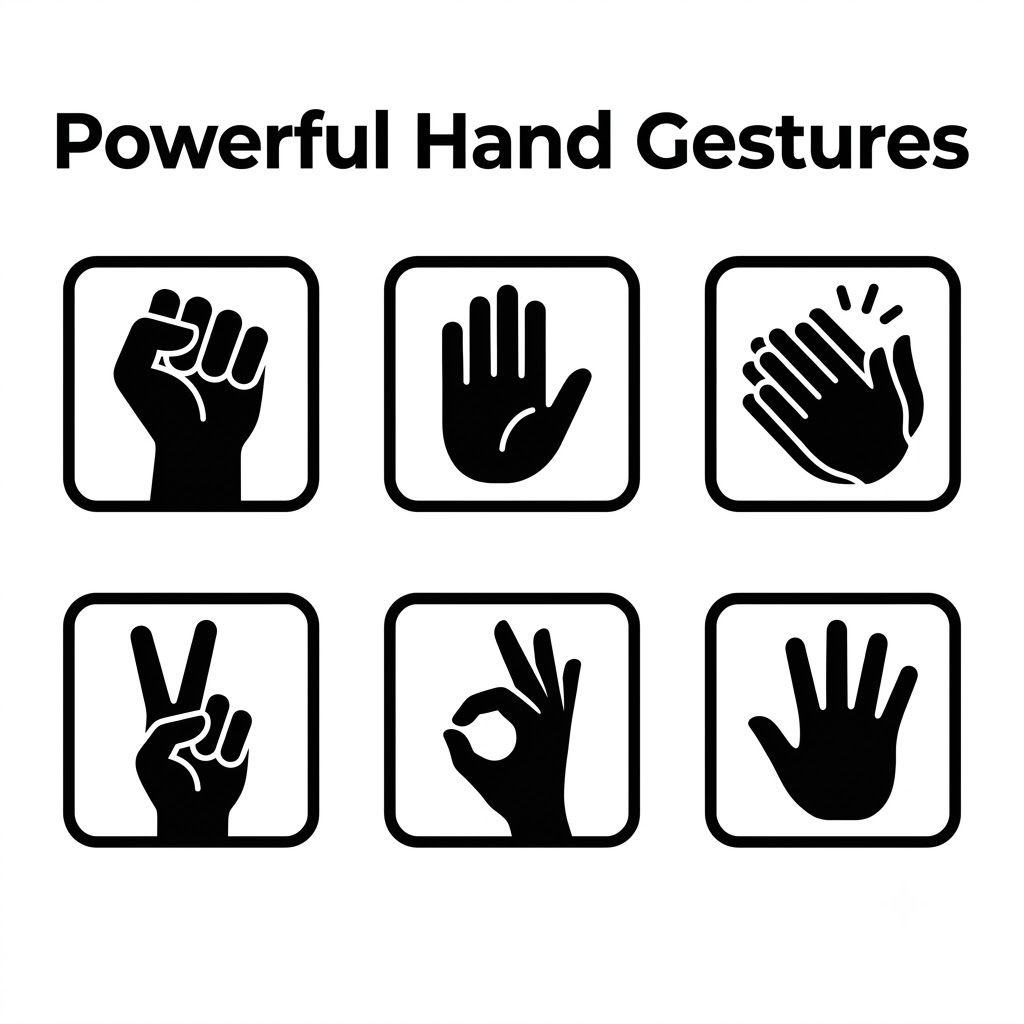
- Open palm: signals honesty and openness
- Steepled fingers: shows confidence and authority
- Praying hands: indicates sincerity or devotion
- Raised fist: represents power and solidarity
- Hamsa hand: spiritual protection against evil
- Gyan mudra: promotes wisdom and focus
- Peace sign: universal symbol of nonviolence
Bad Hand Gestures Meaning With Pictures
Some hand gestures are considered rude or offensive in certain cultures:
- Middle finger: insult in Western countries
- OK sign: offensive in Brazil and parts of Europe
- Thumbs up: can be offensive in the Middle East
- Mano cornuta (horns): can insult someone in Mediterranean cultures
Always research the local meaning of hand symbols before traveling internationally.
Spiritual, Ancient And Cultural Hand Symbols
The spiritual and ancient dimensions of hand symbols reveal how deeply humans have connected gesture to the divine. Across cultures and centuries, specific hand symbols were used in ritual, healing, and worship as tools to access invisible power.
Hand Symbol Meanings Spiritual
Spiritual hand symbol meanings focus on energy, healing, and connection to a higher power. Many traditions teach that hands can both send and receive spiritual force.
Hand Symbols Spiritual
Spiritual hand symbols appear in Hinduism, Buddhism, Christianity, Islam, and indigenous traditions. Each culture has developed its own sacred hand positions to communicate with the divine.
Spiritual Hand Symbols
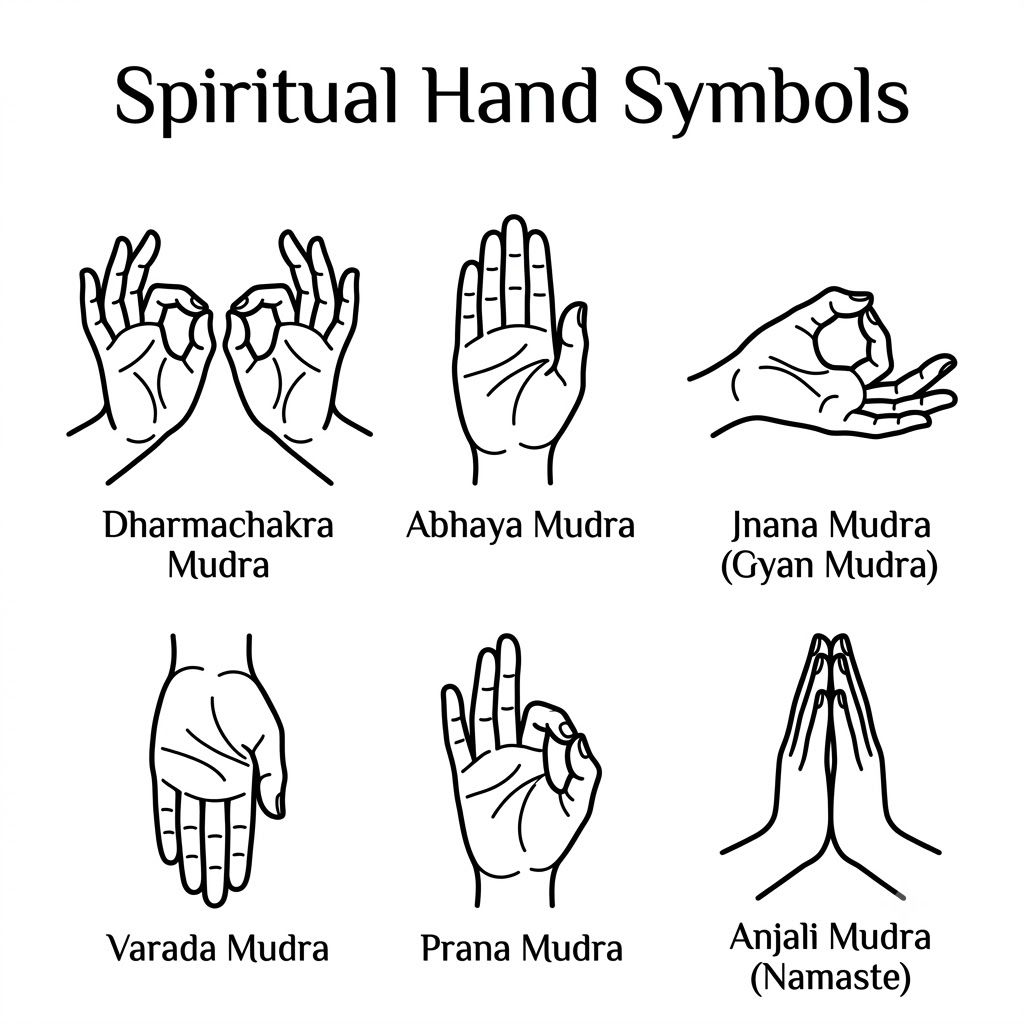
The most recognized spiritual hand symbols include the Hamsa hand, mudras from yoga and meditation, the Abhaya mudra of fearlessness, and the Christian sign of the cross made with the right hand.
Spiritual Hand Symbols And Meanings
| Symbol | Meaning |
| Hamsa Hand | Protection against evil, blessings |
| Gyan Mudra | Knowledge, concentration |
| Abhaya Mudra | Fearlessness, peace |
| Buddhi Mudra | Mental clarity, intuition |
| Praying Hands | Devotion, gratitude, faith |
| Dhyana Mudra | Meditation, inner peace |
Hand Meaning Symbol
The hand meaning symbol in most ancient cultures connects to divine authority. Egyptian hieroglyphs show hands giving blessings. Roman emperors extended their hands to show command. Jewish and Islamic texts describe God reaching out with a strong hand.
Hand Symbols Meanings
Hand symbols meanings shift from protection to blessing to power depending on the tradition. What remains constant is the idea that hands are never neutral. They always carry intention.
Hands Symbol Meaning
The hands symbol meaning in art often shows a contrast between receiving and giving. Open upward palms receive. Open forward palms give or protect.
Powerful Hand Symbols
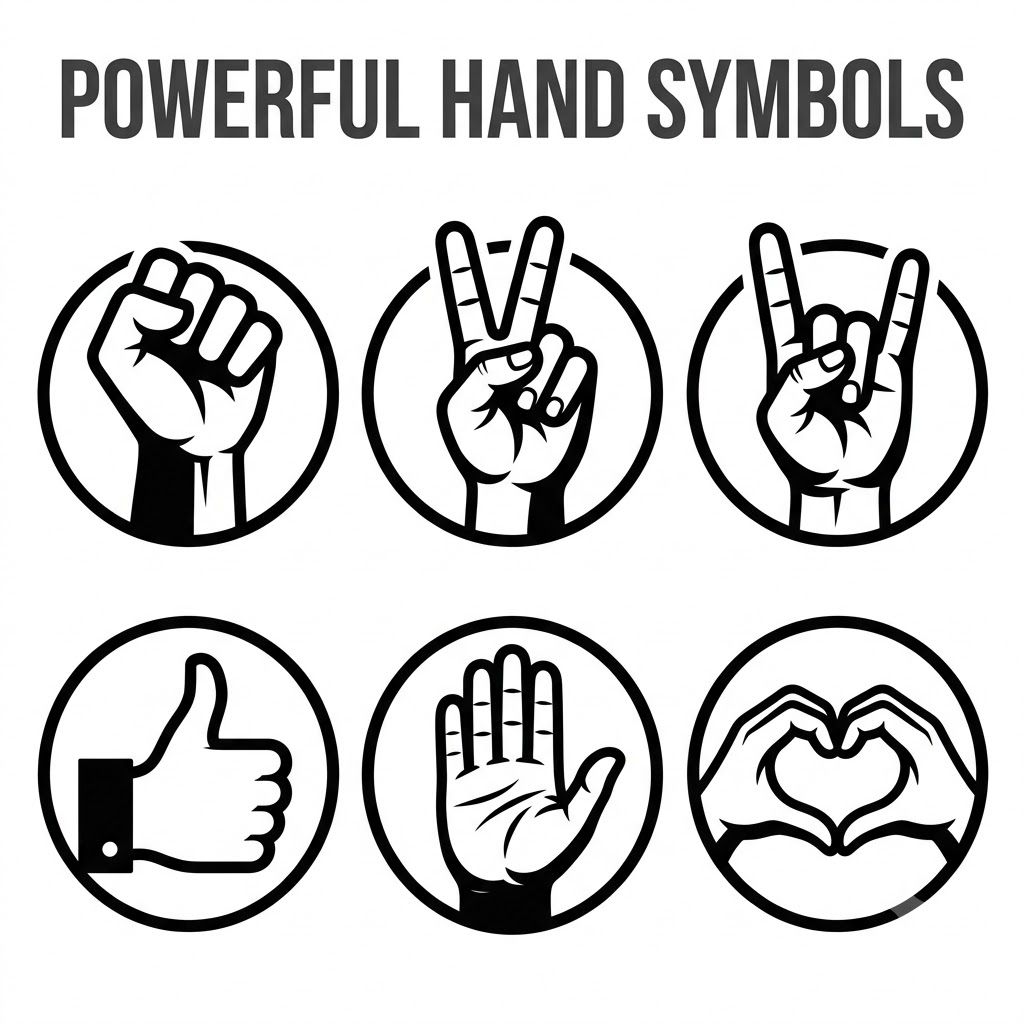
The most powerful hand symbols in history include:
- The Hamsa hand, used across Islam, Judaism, and Christianity
- The Mudra system, central to Hindu and Buddhist practice
- The raised fist, used in political and social movements for centuries
- The blessing hand of Christian iconography
Ancient Hand Symbols And Meanings
Ancient hand symbols and meanings include:
- Cave handprints from prehistoric times representing identity and presence
- The Hand of God (Mano Pantea) from ancient Rome
- The Hand of Fatima from early Islamic and pre Islamic tradition
- The Eye of Horus combined with a hand in Egyptian art
Hand Symbols And Their Meaning
Hand symbols and their meaning have been recorded in every major civilization from Mesopotamia to the Americas. They cross language barriers because they are rooted in shared human experience.
Religious, Occult And Pop Culture Hand Symbols
Hand symbols play a major role in religious practice, occult tradition, and modern entertainment. This section covers the most well known hand signs from faith communities and popular culture.
Christian Hand Symbols
In Christianity, the blessing hand with two or three fingers raised represents the Trinity. The Sign of the Cross is made with the right hand. Praying hands folded together are the most recognized symbol of Christian devotion worldwide.
Buddhist Hand Symbols
Buddhist hand symbols, called mudras, are used during meditation, prayer, and ritual. Key Buddhist mudras include the Gyan mudra (knowledge), Abhaya mudra (fearlessness), and Dhyana mudra (meditation and inner peace).
Satanic Hand Symbols
The mano cornuta (sign of the horns) is often linked to Satanic imagery in pop culture. However, it originated in Mediterranean folk culture as a protective gesture. Context and intent determine its meaning.
Satanic Hand Symbols And Meanings
Some hand symbols are claimed by Satanic or occult traditions as signs of rebellion or allegiance. These include the inverted pentagram formed by fingers and the mano cornuta used to signify dark allegiance in some subcultures.
Demonic Hand Symbols
Demonic hand symbols in folklore and fiction often involve specific finger combinations believed to summon or invoke dark forces. These are primarily symbolic tools in ritualistic or theatrical contexts.
Occult Hand Symbols
Occult hand symbols appear in ceremonial magic, alchemy, and esoteric traditions. The Hand of Glory (a preserved hand used in old European folk magic) and the Sign of Benediction appear in occult literature frequently.
Illuminati Hand Symbols
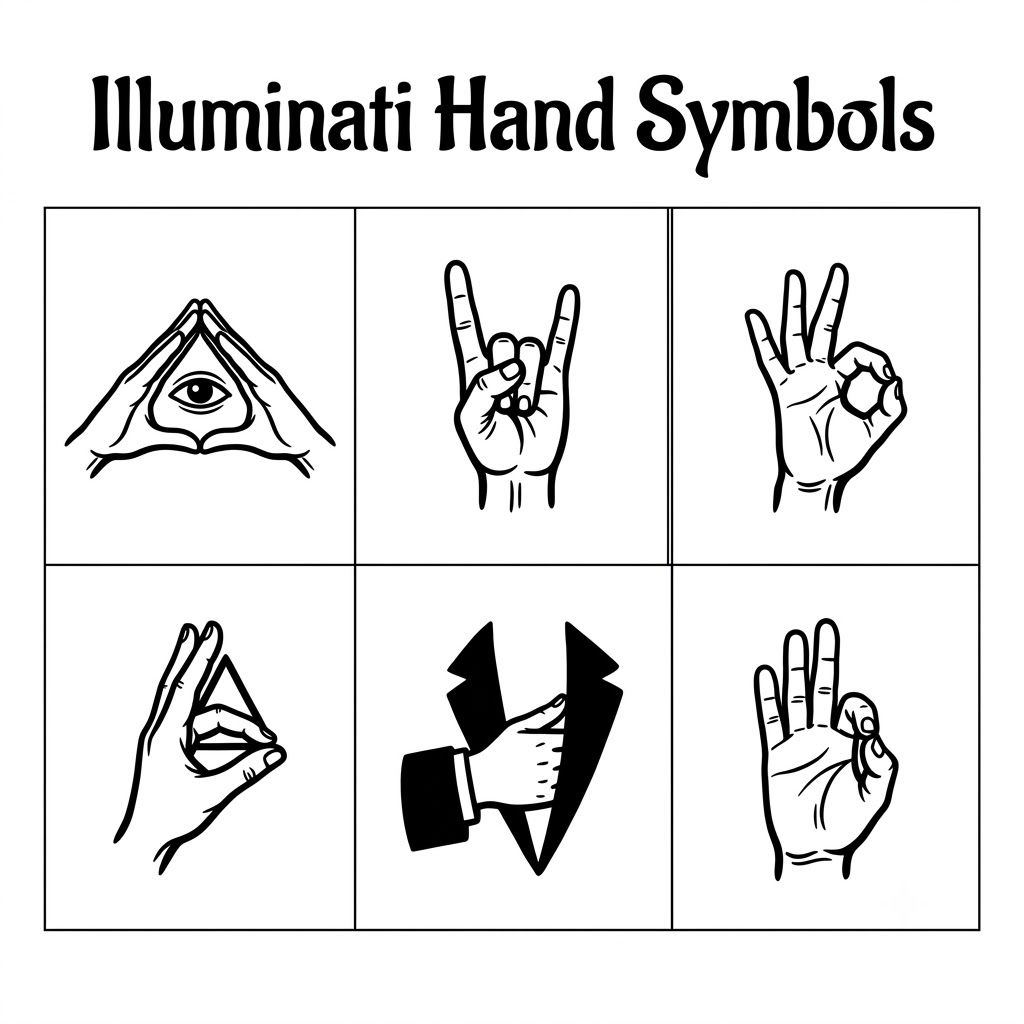
The triangle formed with two hands is widely associated with Illuminati symbolism in modern conspiracy culture. This gesture appears in music videos and celebrity photos and is often labeled an Illuminati hand symbol by observers.
Masonic Hand Symbols
Masonic hand symbols include specific handshakes and grips used as recognition signs between members of the Freemason brotherhood. These handshakes are considered secret and carry ritual significance.
Freemason Hand Symbols
Freemason hand symbols and grips vary by degree within the lodge. They are used as identification between members and carry symbolic meaning tied to brotherhood, truth, and moral integrity.
Sorority Hand Symbols
Sorority hand symbols are used by college sororities to identify members and show unity. Each Greek letter organization has its own unique hand sign used at events, photos, and meetings.
Entertainment And Specialized Hand Signs
Hand symbols have found a permanent place in entertainment and specialized fields. From anime to music education, these signs carry deep cultural and creative meaning.
Naruto Hand Symbols
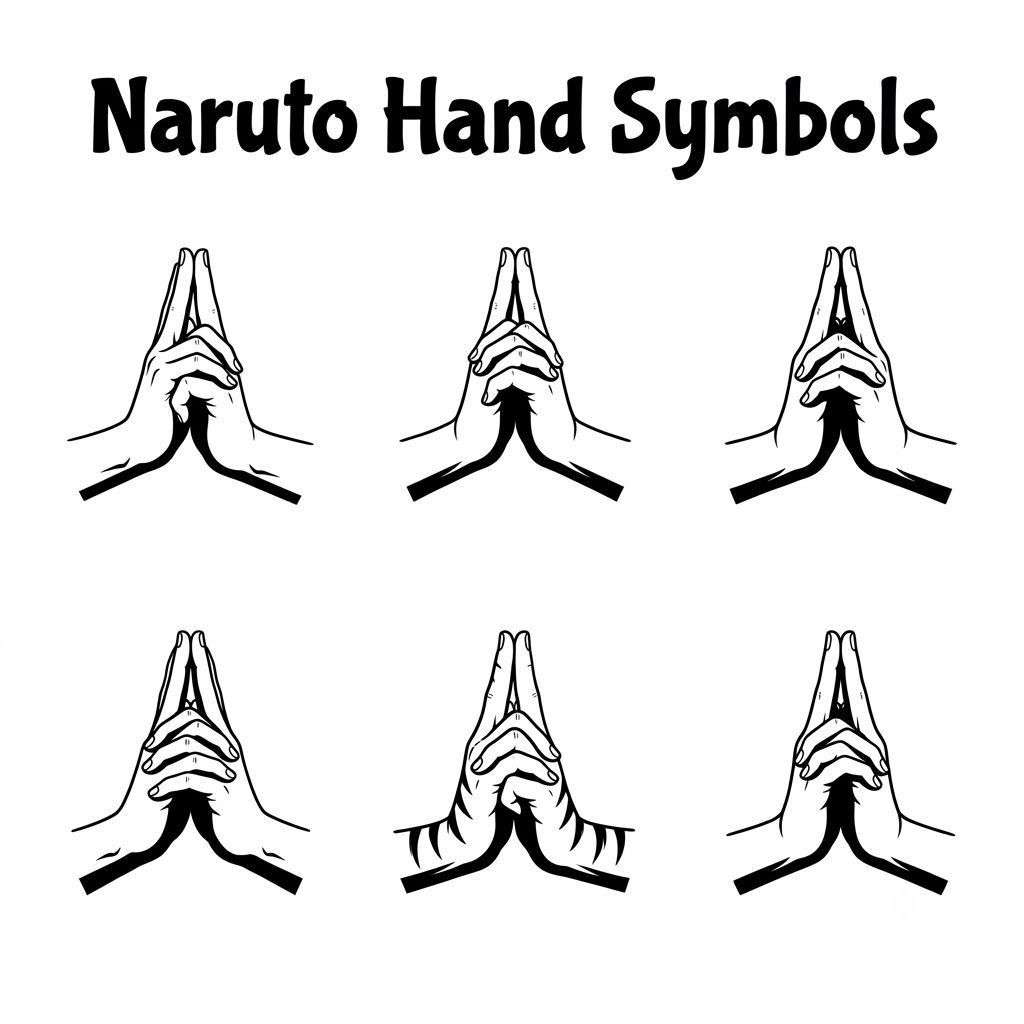
Naruto hand symbols, called hand seals, are used by ninja in the Naruto manga and anime series to perform jutsu (techniques). There are 12 basic seals based on the Chinese zodiac animals. Fans recreate them as a form of fandom participation.
Domain Expansion Hand Symbols
Domain Expansion hand symbols come from the Jujutsu Kaisen anime. Characters perform specific hand gestures to activate their domain expansion technique. These hand signs have become iconic in anime fan culture worldwide.
Solfege Hand Symbols
Solfege hand symbols, also called Curwen hand signs, are used in music education to represent the notes of the musical scale. Each note (Do, Re, Mi, Fa, Sol, La, Ti) has a corresponding hand position that helps students visualize pitch and musical relationships.
Deep Symbolic Meaning of Hand Symbols
Hand symbols operate on multiple levels at once. The same gesture that means protection in one context can represent authority in another. Understanding these layers unlocks the full power of hand symbolism.
Spiritual Level
At the spiritual level, hand symbols connect the human body to divine energy. Mudras balance the five elements within the body. The Hamsa protects against evil. Praying hands open a channel of communication with God.
Psychological Level
Psychologically, hand symbols communicate confidence, trust, and emotion before words are spoken. Open palms suggest honesty. Hidden hands suggest deception. Steepled fingers project authority and control.
Cultural Level
At the cultural level, hand symbols mark group identity and values. Sorority hand signs show membership. Political fists show solidarity. Peace signs mark generational attitudes. Hand symbols reflect who people are and what they believe.
Types and Variations of Hand Symbols
There are hundreds of hand symbols across human history. These six types represent the most influential and widely recognized categories.
Hamsa Hand
The Hamsa hand is an open palm with five fingers, often featuring an eye in the center. It is known as the Hand of Fatima in Islam and the Hand of Miriam in Judaism. Its primary meaning is protection from the evil eye and attraction of good fortune.
Mudras
Mudras are sacred hand positions used in Hindu and Buddhist meditation and ritual. Each mudra activates a specific energy channel in the body and corresponds to one of the five natural elements: fire, air, space, earth, and water.
Raised Fist
The raised fist is a symbol of solidarity, resistance, and collective power. It has been used by labor movements, civil rights activists, and political groups across the world for over a century.
Peace Sign
The peace sign (index and middle finger raised in a V) was popularized in the 1960s as an antiwar symbol. It also means victory in many contexts. Today it is one of the most recognized hand symbols on earth.
Handshake
The handshake began as a gesture to show that neither person was holding a weapon. Today it symbolizes trust, agreement, and equal partnership in business and personal relationships.
Open Palm Blessing
The open palm facing outward or upward appears in Christianity, Buddhism, Hinduism, and Islam as a gesture of blessing, protection, and welcome. It is one of the most shared hand symbols across world religions.
READ MORE: 67+ Powerful Voodoo Symbols
Hand Symbols Across Cultures
Hand symbols connect people across every civilization and era. The meanings may shift but the hand itself remains a universal tool of communication and spiritual expression.
Ancient Civilizations
In ancient Egypt, hands appear in hieroglyphs as signs of power and divine giving. In Rome, the raised hand of an emperor or orator carried political authority. Cave art from prehistoric sites shows hand prints as marks of individual presence.
South Asian Traditions
In India, mudras are central to yoga, meditation, dance, and religious ritual. Each hand position communicates a specific meaning to the divine and to the practitioner. The Anjali mudra (palms pressed together) is the South Asian greeting of respect and devotion.
Middle Eastern Cultures
The Hamsa hand dominates Middle Eastern hand symbolism. Worn as jewelry or displayed on walls and doorways, it protects the home and wearer from the evil eye. The hand of Fatima is among the most powerful protective hand symbols in Islamic tradition.
Western Culture
In the West, hand symbols range from the formal (handshakes, courtroom oaths) to the informal (thumbs up, peace sign). Western culture has also absorbed hand symbols from other traditions, making the Hamsa and mudras widely popular in yoga and spiritual communities.
East Asian Symbolism
In China and Japan, hand gestures appear in Buddhist ritual, martial arts, and traditional theater. The finger heart, originating in South Korea, has spread globally through Korean pop culture. Mudra equivalents appear in Japanese Buddhist statuary.
Hand Symbols in Art, Movies and Pop Culture
Hand symbols have always been a favorite subject of artists, filmmakers, and cultural creators. From Michelangelo’s famous image of God and Adam touching fingers in the Sistine Chapel to the Jay Z diamond Roc sign, hand symbols carry enormous cultural weight.
In film, villains and heroes alike use hand signs to mark identity. Anime series like Naruto and Jujutsu Kaisen have made fictional hand symbols into global fan culture phenomena. Celebrities use hand gestures in music videos and red carpet photos to signal group membership or brand identity.
Spiritual and Dream Meaning of Hand Symbols
Dreaming of hand symbols often carries a message about personal power and direction. Seeing an open hand in a dream suggests an invitation or opportunity. A closed fist in a dream may signal a need to hold on or resist something.
Spiritually, dreaming of hands blessing you points to divine favor. Dreaming of washing hands suggests a desire to clear guilt or start fresh. Many spiritual traditions treat hand visions in dreams as direct messages from the spiritual realm.
Positive vs Negative Meaning of Hand Symbols
| Symbol | Positive Meaning | Negative Meaning |
| Open hand | Welcome, peace, generosity | Used as dismissal in some cultures |
| Raised fist | Strength, unity | Aggression, threat |
| Thumbs up | Approval, encouragement | Offensive in some regions |
| OK sign | Agreement, perfection | Offensive in Brazil and Europe |
| Mano cornuta | Protection in folk tradition | Insult or occult sign in modern context |
| Peace sign | Peace, victory | Offensive in some countries (inverted) |
Why Humans Are Attracted to Hand Symbols

Humans are visual and tactile creatures. The hand is the most active and expressive part of the human body. It builds, creates, touches, heals, and communicates. That natural expressiveness makes hand symbols immediately intuitive and emotionally resonant.
Hand symbols also carry authority. When a leader raises a hand, people follow. When a teacher draws a hand sign, students remember. The brain processes hand gestures faster than spoken words, which is why hand symbols have survived for thousands of years across every human culture.
Conclusion
Hand symbols are far more than simple gestures. They carry centuries of meaning rooted in spirituality, culture, psychology, and human identity. From the Hamsa hand and Buddhist mudras to modern peace signs and anime hand seals, every hand symbol tells a story.
Learning to read these symbols gives you a richer understanding of the world around you and the deeper messages people have always shared through their hands.

Ethan Brooks is a writer and researcher at TechTimeGP, sharing clear and informative guides about symbols, signs, and their meanings. He explores the history, cultural significance, and modern uses of different symbols to help readers understand the stories behind them. His goal is to make symbol meanings simple, accurate, and easy for everyone to discover.