37+ Buddhist Symbols and Meanings: Ancient Signs of Enlightenment, Protection & Inner Peace (2026)
Buddhist symbols have been used for over 2,500 years. They carry powerful messages about life, peace, and freedom. People all around the world use them every day. These symbols help guide anyone who is looking for meaning and calm.
In 2026, Buddhist symbols are more popular than ever. You can find them in temples, tattoos, jewelry, and home decor. Each one holds a lesson that words alone cannot fully explain. Once you understand them, your life can start to change for the better.
What Are Buddhist Symbols and Meanings?
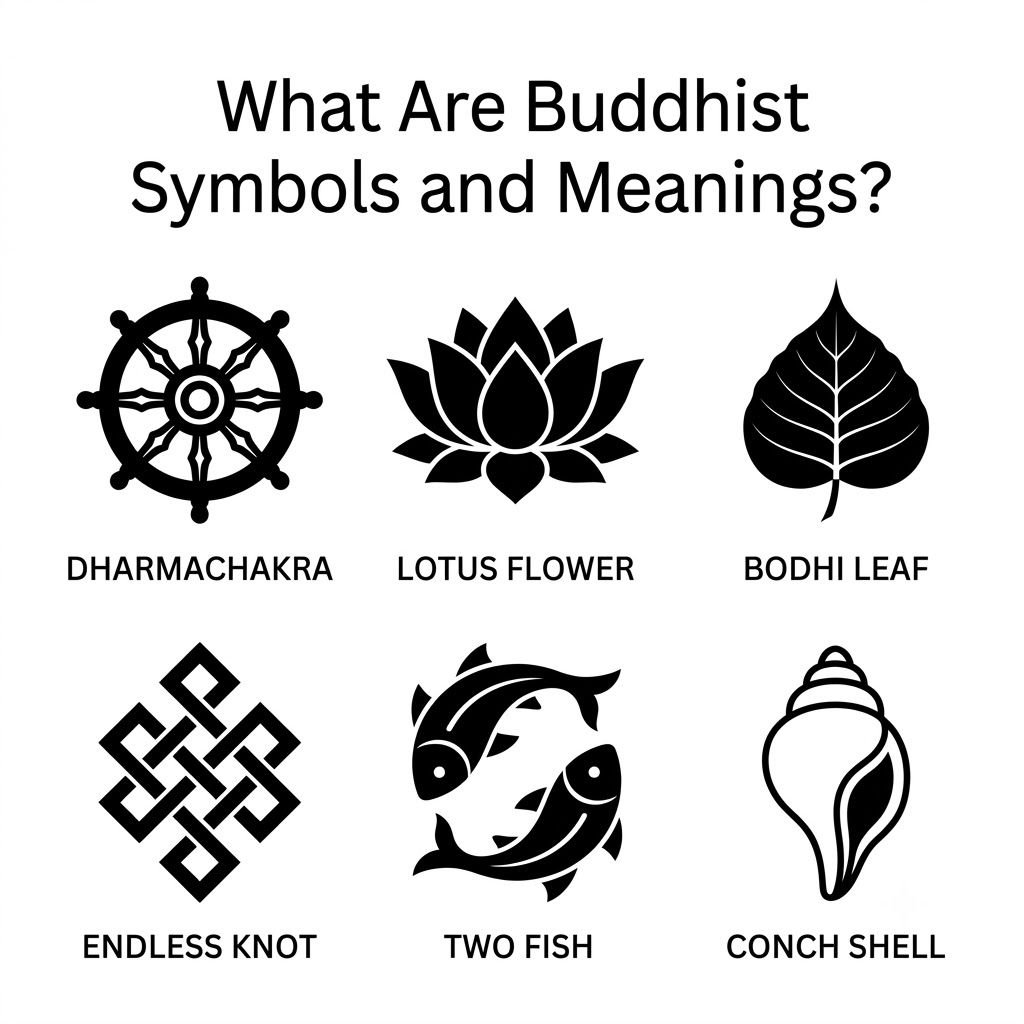
Buddhist symbols are visual tools that express the core teachings of the Buddha. They appear in temples, art, jewelry, tattoos, and everyday objects. Each symbol tells a story about the path to enlightenment, inner peace, and liberation from suffering.
These symbols are not just decorative. They are a language. Each shape and image carries a lesson that words alone cannot fully explain. When you understand Buddhist symbols, you start to see Buddhism itself more clearly.
Understanding Buddhist Symbols And Their Deep Meanings
Buddhist symbols connect the mind to spiritual truth. They make complex teachings easy to understand and remember. Whether carved in stone or worn on skin, each symbol holds wisdom passed down through generations.
What Are The 8 Symbols Of Buddhism?
The 8 symbols of Buddhism are called the Ashtamangala. These are eight sacred signs that were said to be offered to the Buddha after he reached enlightenment. Together, they represent the complete path to spiritual awakening.
8 Symbols Of Buddhism And What They Mean
| Symbol | Core Meaning |
| Dharma Wheel | Buddha’s teachings and the Eightfold Path |
| Lotus Flower | Purity, awakening, and spiritual growth |
| Conch Shell | Spreading the dharma far and wide |
| Endless Knot | Interconnection of wisdom and compassion |
| Golden Fish Pair | Freedom, fearlessness, and liberation |
| Parasol | Protection from suffering and negativity |
| Treasure Vase | Abundance and the endless wealth of dharma |
| Victory Banner | Triumph over ego, lust, and delusion |
5 Symbols Of Buddhism

The five most recognized Buddhist symbols are the Dharma Wheel, Lotus Flower, Bodhi Tree, Om symbol, and the Buddha image. Each one connects to a key idea in Buddhist philosophy and is widely used in meditation, art, and worship.
Popular Buddhist Symbols And Their Uses In Daily Life
Buddhist symbols are not limited to temples or monks. Millions of people use them every day for guidance, protection, and peace. They show up in home decor, fashion, tattoos, and spiritual practice.
Buddhist Symbol Of Life
The Wheel of Life, also called Bhavachakra, is the key Buddhist symbol of life. It shows the cycle of birth, death, and rebirth. The three inner symbols inside the wheel represent greed, hatred, and ignorance, which are the root causes of suffering.
Buddhist Symbols And Meanings For Tattoos
Buddhist symbols are among the most popular tattoo choices worldwide. People get the lotus, Om sign, Dharma Wheel, and endless knot tattooed to express inner growth, peace, and spiritual commitment. These tattoos serve as daily reminders of their personal values.
Buddhist Symbols Images
Images of Buddhist symbols appear in temples, thangka paintings, and sacred manuscripts. Common images include the eight auspicious symbols arranged together, the seated Buddha in meditation, and the lotus mandala. Each image carries its own spiritual vibration and meaning.
Buddhist Protection Symbols
The parasol, vajra, and endless knot are the most powerful Buddhist protection symbols. They are believed to guard the wearer from negative energy, harmful thoughts, and spiritual obstacles. Many people place these symbols in their homes or wear them as amulets.
Buddhist Symbol For Love

The lotus flower is the closest Buddhist symbol for love and compassion. It represents pure, unconditional love that rises above pain and difficulty. Kuan Yin, the Bodhisattva of Compassion, is also a powerful symbol of loving kindness in Buddhist culture.
Zen Buddhist Symbols
Zen Buddhism uses simple, clean symbols to express deep truths. The most iconic is the Enso, a hand-drawn circle that symbolizes completeness, the infinite, and the empty mind. Other Zen Buddhist symbols include the simple seated figure and the Bodhi leaf.
Buddhist Symbols Meanings
Every Buddhist symbol carries layers of meaning. The dharma wheel stands for teaching. The lotus stands for purity. The bodhi tree stands for awakening. Together, these Buddhist symbols form a complete visual guide to the path of enlightenment.
Meaning Of Buddha Symbols
Symbols connected to the Buddha himself reflect his life journey. The Bodhi Tree marks his awakening. The deer park at Sarnath marks his first teaching. His footprints, known as Buddhapada, are a symbol of his presence and the path he walked.
Buddhism Symbol And Meaning
The main Buddhism symbol recognized worldwide is the Dharma Wheel. Its eight spokes represent the Noble Eightfold Path, which is the practical guide to ending suffering and achieving freedom.
Buddhist Symbol Tattoos

Tattoos of Buddhist symbols carry personal and spiritual meaning. Popular choices include the unalome, which shows the winding journey to enlightenment, and the lotus, which shows growth through difficulty. These are not just art; they are statements of values.
Symbols Of Zen Buddhism
Zen Buddhism values minimalism and direct experience. Its symbols reflect this. The Enso circle, the simple brushstroke, and the seated meditator are all symbols of Zen Buddhism that point to the nature of the present moment.
Inner Peace Buddhist Symbol
The meditating Buddha is the most widely recognized inner peace Buddhist symbol. The calm, seated posture with eyes gently closed communicates stillness, balance, and deep inner calm. Many people keep this image in their homes to create a peaceful environment.
Buddhist Inner Peace Symbol
The lotus is also a powerful Buddhist inner peace symbol. Its ability to grow beautifully from muddy water is a reminder that peace is always possible, no matter how difficult life becomes.
Buddhism Symbols And Meanings
Buddhism symbols and meanings are deeply connected to the Four Noble Truths and the Eightfold Path. They translate these teachings into visual form. Each symbol is a reminder to live with awareness, kindness, and clarity.
Buddhist Images And Meanings
Buddhist images like the thousand-armed Avalokiteshvara represent compassion in action. The Medicine Buddha image stands for healing. Each sacred image in Buddhism is a teaching tool that helps practitioners stay focused on their path.
Buddhist Symbol Meaning
At their core, Buddhist symbol meanings center on three things: wisdom, compassion, and liberation. Every major Buddhist symbol points back to at least one of these three qualities.
Buddhist Symbols And Their Meanings
Buddhist symbols and their meanings vary slightly across traditions like Theravada, Mahayana, and Vajrayana. However, core symbols like the lotus and dharma wheel are recognized and respected across all branches of Buddhism.
Buddha Symbols Meaning
Buddha symbols and their meanings connect the practitioner to the qualities the Buddha embodied. These include courage, wisdom, peace, and unconditional compassion. Meditating on these symbols is a practice in itself.
Buddhist Protection Symbol
The vajra is one of the strongest Buddhist protection symbols. It represents the indestructible nature of truth and is used in Tibetan Buddhist rituals to cut through ignorance and fear. The parasol is another key symbol that offers shelter from all forms of harm.
Buddhist Symbols For Peace
The lotus, the meditating Buddha, and the Enso circle are the most used Buddhist symbols for peace. They communicate calm, balance, and the possibility of a peaceful mind, no matter what is happening in the outside world.
Zen Symbols And Meanings
Zen symbols focus on the present moment and the nature of emptiness. The Enso means wholeness and the unending nature of existence. The Bodhi leaf means the capacity for awakening that exists in every person.
Symbols And Meanings Of Buddhism
The symbols and meanings of Buddhism reflect the teachings of the dharma in visual form. They cover themes of suffering, impermanence, compassion, mindfulness, and the possibility of full liberation from pain.
Buddhist Symbol For Protection
The parasol and the endless knot are the top Buddhist symbols for protection. The parasol shields against obstacles on the path to enlightenment. The endless knot reminds practitioners that wisdom and compassion always protect the mind.
Buddhist Symbol Meanings
Buddhist symbol meanings are layered. On the surface, they represent historical stories and teachings. On a deeper level, they map the inner journey of the human mind toward clarity and peace.
Buddhist Symbol For Inner Peace
The meditating Buddha, the lotus, and the Enso are all used as a Buddhist symbol for inner peace. Each one communicates that stillness and peace come from within, not from external circumstances.
Enlightenment Symbols And Meanings
The Bodhi Tree, the Dharma Wheel, and the lotus are the primary enlightenment symbols in Buddhism. They remind practitioners that awakening is not a myth but a real possibility that humans can achieve in this lifetime.
Buddhist Signs And Meanings
Buddhist signs appear everywhere from temple gates to personal jewelry. Mudras, or sacred hand gestures, are also important Buddhist signs. Each mudra, like the Dhyana mudra for meditation or the Abhaya mudra for fearlessness, carries its own precise meaning.
Buddha Symbols And Meanings
Buddha symbols and meanings include the whole range of sacred signs connected to his life and teaching. From his first footsteps to his final breath under the sala trees, each moment in the Buddha’s life has become a symbol of something universal.
Enlightenment Buddhist Symbols

The top enlightenment Buddhist symbols are the Bodhi Tree, the lotus in full bloom, and the Dharma Wheel in motion. Each one points to the moment when confusion ends and clear awareness begins.
What Does The Buddhist Symbol Mean?
A Buddhist symbol is a visual teaching. It means something specific about the path of practice, the nature of the mind, or the qualities of an enlightened being. Understanding each symbol helps you understand Buddhism itself.
Buddha Protection Symbol
The parasol is the classic Buddha protection symbol. It represents the shelter that the dharma provides against suffering, confusion, and harm. In Tibetan Buddhism, it is held above important teachers during ceremonies.
Tibetan Buddhist Symbols And Meanings
Tibetan Buddhist symbols and meanings include the vajra, bell, prayer wheel, and thangka imagery. The vajra represents indestructible truth. The bell represents wisdom. Together they symbolize the union of compassion and insight that leads to full awakening.
Strength Buddhist Symbols And Meanings
The lion is a powerful strength Buddhist symbol. It represents the courage of the Buddha, who is called the Lion of the Shakyas. The vajra also represents strength as it is described as harder than a diamond and more forceful than a thunderbolt.
Enlightenment Buddhist Symbols And Meanings
Enlightenment Buddhist symbols and meanings point to Nirvana, the state beyond suffering. The Bodhi Tree marks where it happened. The lotus shows how it happens. The Dharma Wheel shows the path that leads there.
Zen Buddhist Symbols And Meanings
Zen Buddhist symbols and meanings are expressed through simplicity. The Enso circle means that everything is already complete. The simple meditating figure means that sitting quietly is itself the practice.
Thai Buddhist Symbols And Meanings
Thai Buddhist symbols and meanings often include the sacred Sak Yant tattoo designs, the nine-spired temples, and the many-armed deity images. These are deeply rooted in Theravada Buddhist traditions and carry powerful protective and blessing meanings.
Tattoo Buddhist Symbols And Meanings
Tattoo Buddhist symbols and meanings are chosen for personal reasons. The unalome is popular for its message of progress through struggle. The lotus is chosen for its meaning of beauty rising from difficulty. Always choose symbols whose meanings align with your personal values.
List Of Buddhist Symbols And Meanings
Key Buddhist symbols include the Dharma Wheel, lotus, Bodhi Tree, endless knot, parasol, conch shell, victory banner, treasure vase, golden fish, Om, vajra, stupa, Enso, and Buddha image. Each one carries a specific teaching about life, mind, and liberation.
Family Buddhist Symbols And Meanings
The lotus can represent family in Buddhist culture, showing that each member grows from the same roots but blooms in their own way. The endless knot also represents family bonds, showing that love and connection are timeless.
Inner Strength Buddhist Symbols And Meanings
The lion and the vajra are the main inner strength Buddhist symbols. They encourage practitioners to face difficulty with courage, clarity, and an unbreakable spirit, just as the Buddha did when he overcame all obstacles to reach enlightenment.
Protection Buddhist Symbols And Meanings
Protection Buddhist symbols and meanings include the parasol, the vajra, the endless knot, and the conch shell. Together, they create a complete system of spiritual protection that guards the mind against fear, negativity, and ignorance.
Inner Peace Buddhist Symbols And Meanings
Inner peace Buddhist symbols and meanings focus on stillness, awareness, and acceptance. The meditating Buddha, lotus, and Enso circle all carry the message that peace is your true nature and is always available when you return to the present moment.
Theravada Buddhist Symbols And Meanings
Theravada Buddhist symbols and meanings focus on the historical Buddha and the early sangha. Key symbols include the Dharma Wheel, the Bodhi Tree, the Buddha footprint, and the stupa. These symbols reflect the oldest and most traditional form of Buddhist teaching.
Spiritual Buddhist Symbols And Meanings
Spiritual Buddhist symbols and meanings cover the full range of the inner journey. From the first step of awareness to the final moment of full awakening, these symbols map the entire path of spiritual development.
Buddhist Symbols And Meanings
The 8 Buddhist symbols and meanings are the Dharma Wheel (teaching), lotus (purity), conch shell (dharma call), endless knot (interconnection), golden fish (freedom), parasol (protection), treasure vase (abundance), and victory banner (triumph over ego).
Lotus Flower Buddhist Symbols And Meanings
The lotus flower Buddhist symbol meaning is one of the most beloved in all of Buddhism. It grows through dark, muddy water to bloom in perfect beauty. This is the story of every human being who chooses the path of practice and rises above suffering into clarity and peace.
READ MORE: One Piece Symbols Hidden Meanings, Deep Secrets and the Powerful Messages Behind Them
Deep Symbolic Meaning of Buddhist Symbols
Buddhist symbols work on more than one level. They speak to the spirit, the mind, and the culture at the same time. Understanding all three layers gives you a much richer appreciation of what these symbols truly mean.
Spiritual Level
At the spiritual level, Buddhist symbols represent states of consciousness and stages of awakening. The lotus in full bloom means full enlightenment. The unalome’s spiral and straight line show the journey from confusion to clarity.
Psychological Level
At the psychological level, Buddhist symbols serve as anchors for the mind. When a practitioner sees the meditating Buddha, the mind naturally moves toward stillness. These symbols train the mind over time through repeated positive association.
Cultural Level
At the cultural level, Buddhist symbols carry the identity and history of communities across Asia and now the world. They appear in architecture, festivals, royal ceremonies, and everyday rituals, marking the deep roots of Buddhist culture in human civilization.
Types and Variations of Buddhist Symbols and Meanings
Buddhist symbols fall into several distinct categories. Each type serves a different purpose in practice and teaching. Here are the six most important types of Buddhist symbols.
The Dharma Wheel (Dharmachakra)
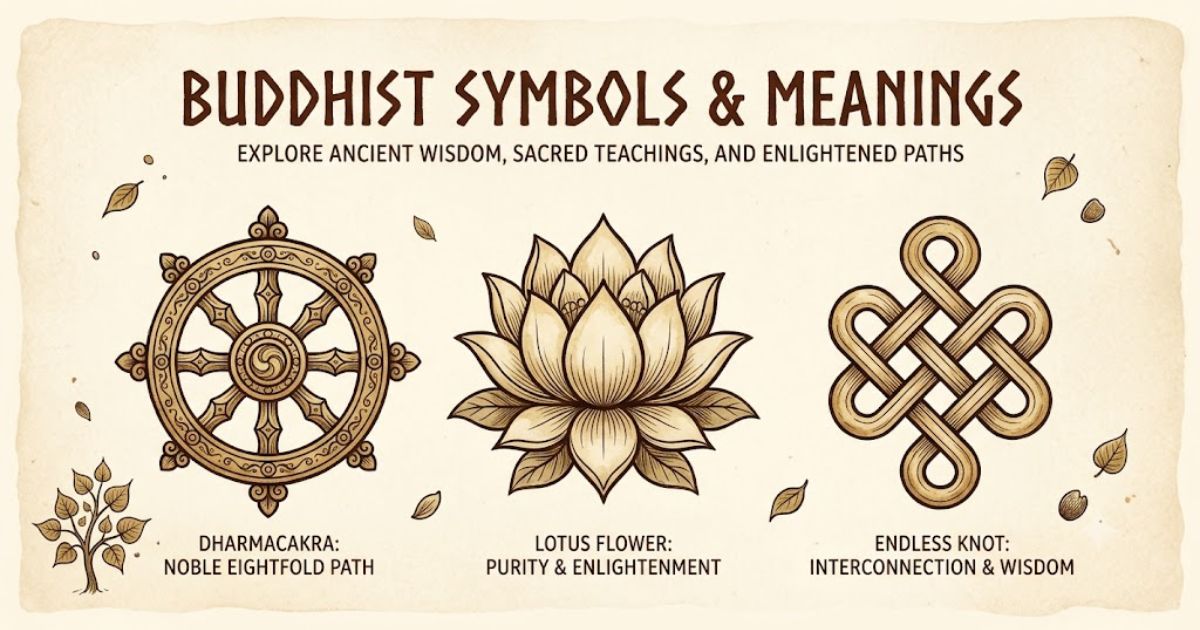
The Dharma Wheel is the most recognized of all Buddhist symbols. Its eight spokes stand for the Noble Eightfold Path. The wheel began turning when the Buddha gave his first teaching in a deer park near Sarnath, India. It represents the ongoing movement of dharma through the world.
The Lotus Flower
The lotus is one of the most universal Buddhist symbols. It grows in muddy water but blooms in perfect purity. A closed bud means the beginning of the spiritual journey. A half-open flower means practice is underway. A fully open lotus means complete awakening has been achieved.
The Buddha Image
The Buddha image is a central symbol in most forms of Buddhism. Different hand positions, or mudras, carry different meanings. The meditation mudra shows inner focus. The earth-touching mudra recalls the moment of enlightenment. The teaching mudra shows the Buddha sharing the dharma.
The Endless Knot
The endless knot is a continuous, interwoven pattern with no beginning and no end. It represents the interconnection of all things, the union of wisdom and compassion, and the endless nature of reality itself. It is one of the most beloved Buddhist symbols in Tibetan culture.
The Bodhi Tree
The Bodhi Tree is where the Buddha sat in deep meditation until he reached full enlightenment. The original tree still stands in Bodh Gaya, India. Its heart-shaped leaves have become a symbol of the potential for awakening that exists within every human being.
The Stupa
The stupa is a dome-shaped structure that serves as a Buddhist monument and reliquary. It represents the Buddha’s mind and the path to enlightenment. Stupas are found across Asia and are sites of pilgrimage, meditation, and devotion.
Buddhist Symbols and Meanings Across Cultures
Buddhist symbols carry universal messages, but each culture has expressed them in its own unique way. Understanding how different cultures use these symbols enriches our appreciation of their depth and adaptability.
Ancient India
Ancient India is where Buddhist symbols first developed. The Dharma Wheel, lotus, and Bodhi Tree all appeared in Indian art and architecture from around the 3rd century BCE. Early Indian Buddhist art avoided direct depictions of the Buddha and used symbols instead.
Tibetan Culture
Tibetan culture developed one of the richest systems of Buddhist symbols in the world. Thangka paintings, prayer flags, prayer wheels, and mandalas all carry elaborate symbolic meaning. The eight auspicious symbols are central to Tibetan Buddhist life and ceremony.
Chinese Buddhism
Chinese Buddhism blended Indian Buddhist symbols with local traditions. The dragon, lotus, and laughing Buddha figure are widely recognized Chinese Buddhist symbols. The Ruyi scepter and the ever-burning lamp are unique to Chinese Buddhist symbolism.
Japanese Buddhism
Japanese Buddhism gave the world the Enso circle, a uniquely Zen symbol of wholeness and the present moment. Japanese Buddhist temples also use elaborate gate imagery, stone lanterns, and garden design as symbolic expressions of dharma principles.
Modern Global Culture
Today, Buddhist symbols appear in yoga studios, mindfulness apps, tattoo parlors, and fashion worldwide. While this reflects a genuine global interest in Buddhist wisdom, it also calls for respectful understanding of what each symbol truly means and where it comes from.
Buddhist Symbols in Art, Movies and Pop Culture
Buddhist symbols have made their mark on global art and media. The lotus and Om sign appear in countless albums, films, and fashion collections. Movies like Kundun, Little Buddha, and Spring, Summer, Fall, Winter… and Spring use Buddhist symbols as central visual languages. Artists like Andy Warhol and fashion houses like Valentino have drawn inspiration from Buddhist imagery.
Pop culture often simplifies these symbols, but the global interest they generate has also helped many people discover the genuine teachings behind them. This is both a challenge and an opportunity for deeper cultural understanding.
Spiritual and Dream Meaning of Buddhist Symbols
Seeing Buddhist symbols in dreams is considered significant in many spiritual traditions. Dreaming of a lotus often signals personal growth and healing. A dream of the Dharma Wheel can suggest that life is moving in a new and purposeful direction.
In meditation, these symbols can arise as signs of deepening practice. A spontaneous vision of the Bodhi Tree may signal that a breakthrough in understanding is near. Many teachers encourage practitioners to sit with these dream images and explore what they personally mean.
Positive vs Negative Meanings of Buddhist Symbols
Buddhist symbols are generally positive in nature. However, like all symbols, they carry shadow meanings when misused or misunderstood.
Positive Meanings
Buddhist symbols in their true context carry messages of peace, liberation, compassion, wisdom, and protection. They inspire ethical living and help the mind turn away from greed, hatred, and confusion.
Negative or Shadow Meanings
When Buddhist symbols are used without understanding or cultural respect, they can become empty decoration. A lotus tattoo worn without knowledge of its meaning, for example, loses its spiritual power. Symbols misused as cultural appropriation can also cause harm to communities for whom they are sacred.
Why Humans Are Drawn to Buddhist Symbols

Humans are drawn to Buddhist symbols because they speak a universal language. They address experiences that every person shares: suffering, the search for meaning, the desire for peace, and the hope for something better.
These symbols do not require complex language or a specific culture. A lotus speaks across every language barrier. A meditating Buddha communicates calm without a single word. In a noisy and uncertain world, Buddhist symbols offer something rare: a clear, visual reminder that peace, wisdom, and liberation are always possible.
Conclusion
Buddhist symbols are far more than beautiful images. They are living teachings carved in visual form. Whether you connect with the lotus, the Dharma Wheel, or the simple Enso circle, each symbol carries a message that is as relevant today as it was 2,500 years ago.
Take time to learn what each symbol means before wearing or displaying it. When you understand a symbol, it becomes a genuine tool for growth rather than just decoration. Let these ancient Buddhist symbols guide you toward more awareness, more compassion, and more peace in your daily life.

Ethan Brooks is a writer and researcher at TechTimeGP, sharing clear and informative guides about symbols, signs, and their meanings. He explores the history, cultural significance, and modern uses of different symbols to help readers understand the stories behind them. His goal is to make symbol meanings simple, accurate, and easy for everyone to discover.