95+ Anti Fascist Symbols: Meanings, History & Global Significance (2026)
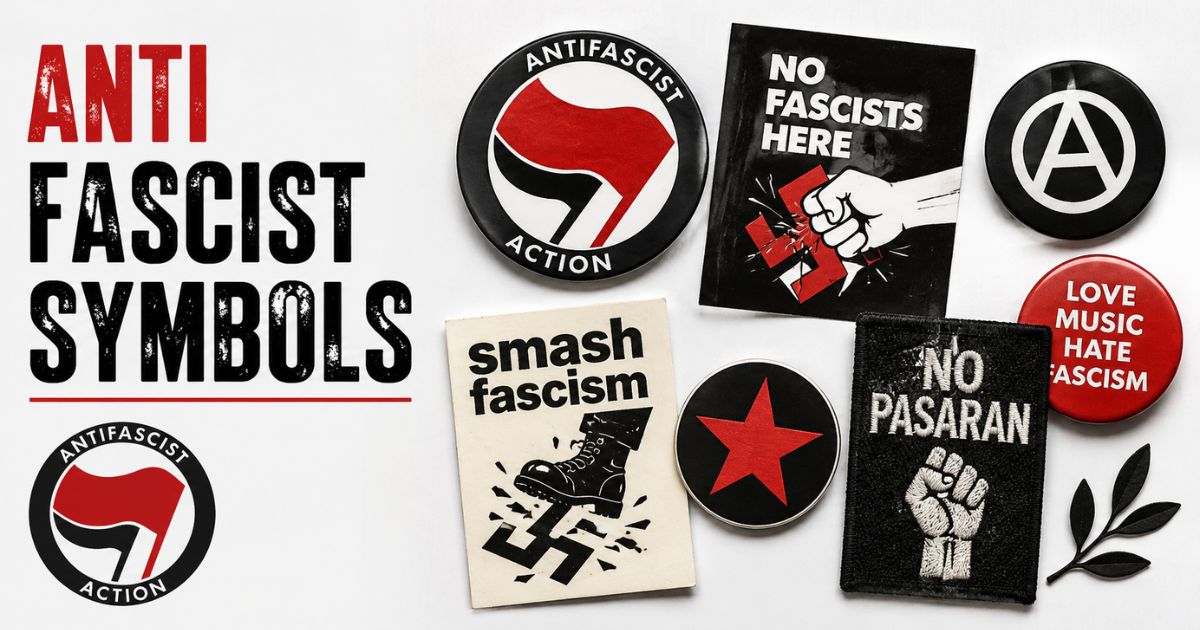
Anti fascist symbols have shaped political movements for nearly a century, appearing on flags, posters, clothing, and street art around the world. These symbols carry deep historical roots, tracing back to the fight against Nazi Germany and other authoritarian regimes in the early 1900s.
In this guide, we will explore the meaning, history, and cultural significance of anti fascist symbols, looking at where they came from and how they are used today across different countries and communities.
What are Anti Fascist Symbols?

Anti fascist symbols are visual signs, flags, and emblems used to represent opposition to fascism, authoritarianism, and totalitarian rule. They emerged mainly in early twentieth century Europe as resistance movements needed clear, recognizable imagery to unite supporters against Nazi and fascist regimes.
These symbols were designed to be simple and bold so they could be quickly painted, printed, or displayed during protests. Over time, many of these anti fascist symbols spread beyond their original countries and became international markers of resistance against authoritarianism.
Deep Symbolic Meaning
Anti fascist symbols carry meaning on several levels, going beyond their basic political message to touch on deeper spiritual, psychological, and cultural themes.
Spiritual Level
On a spiritual level, anti fascist symbols often represent the human desire for freedom and resistance against oppression. They stand as a reminder that individuals and communities have historically banded together to protect basic human dignity from authoritarian control.
Psychological Level
Psychologically, these symbols tap into feelings of solidarity, courage, and collective identity. Displaying an anti fascist symbol can give people a sense of belonging to a larger movement and a feeling of standing up against fear and intimidation.
Cultural Level
Culturally, anti fascist symbols reflect specific historical struggles, particularly the fight against Nazi Germany, Italian fascism, and other authoritarian regimes of the twentieth century. They remain culturally significant markers used in education, protest movements, and public memory of that era.
Types and Variations of Anti Fascist Symbols
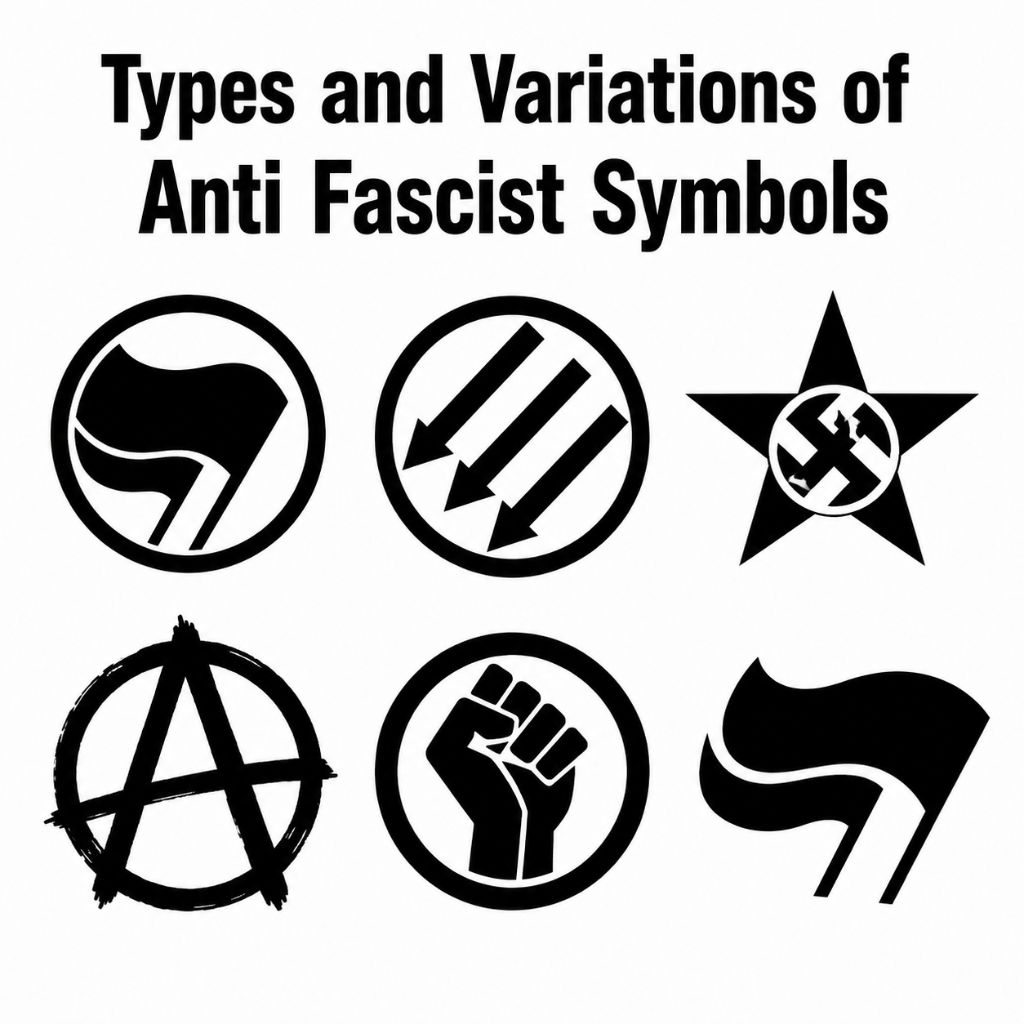
There are several well known anti fascist symbols, each with its own distinct origin and history. Here is a closer look at the most recognized ones.
Three Arrows
The Three Arrows symbol was created in 1931 by Sergei Chackhotin and Carlo Mierendorf for the Iron Front, a coalition of Social Democrats and labor groups in the Weimar Republic.
The three arrows, usually pointing downward and to the left inside a circle, were originally meant to represent opposition to Nazism, monarchism, and Stalinist communism, and the design was inspired by graffiti that crossed out a swastika with simple chalk lines.
Antifa Flag
The Antifa flag typically features two flags side by side, one red and one black, representing the historical alliance between communist and anarchist traditions in opposing fascism.
This two flag design traces back to the Antifaschistische Aktion group formed in Germany in the early 1930s and remains one of the most recognized anti fascist symbols worldwide today.
Raised Fist
The raised fist is a broader symbol of resistance and solidarity that has been adopted by anti fascist movements alongside labor unions and civil rights campaigns. It represents collective strength and defiance against oppression rather than any single political ideology.
Circle A
The circled letter A is primarily a symbol of anarchism, representing the idea that society can find order without centralized authority. It is frequently used alongside other anti fascist symbols at protests, even though it originally represents anarchist philosophy rather than anti fascism specifically.
READ MORE ABOUT THIS BLOG: Artemis Symbols: Meanings, History & Sacred Signs
No Fascism Sign
The no fascism sign, often shown as a crossed out swastika or a simple prohibition symbol over fascist imagery, is a direct and widely understood visual statement rejecting fascist ideology. It is commonly used in educational materials, protest signs, and public awareness campaigns.
| Symbol | Origin | Core Meaning |
| Three Arrows | Germany, 1931, Iron Front | Opposition to fascism, monarchism, and totalitarianism |
| Antifa Flag | Germany, early 1930s | Communist and anarchist unity against fascism |
| Raised Fist | Labor and civil rights movements | Solidarity and collective resistance |
| Circle A | Anarchist tradition | Order without centralized authority |
| No Fascism Sign | Modern usage worldwide | Direct rejection of fascist ideology |
Anti Fascist Symbols Across Cultures
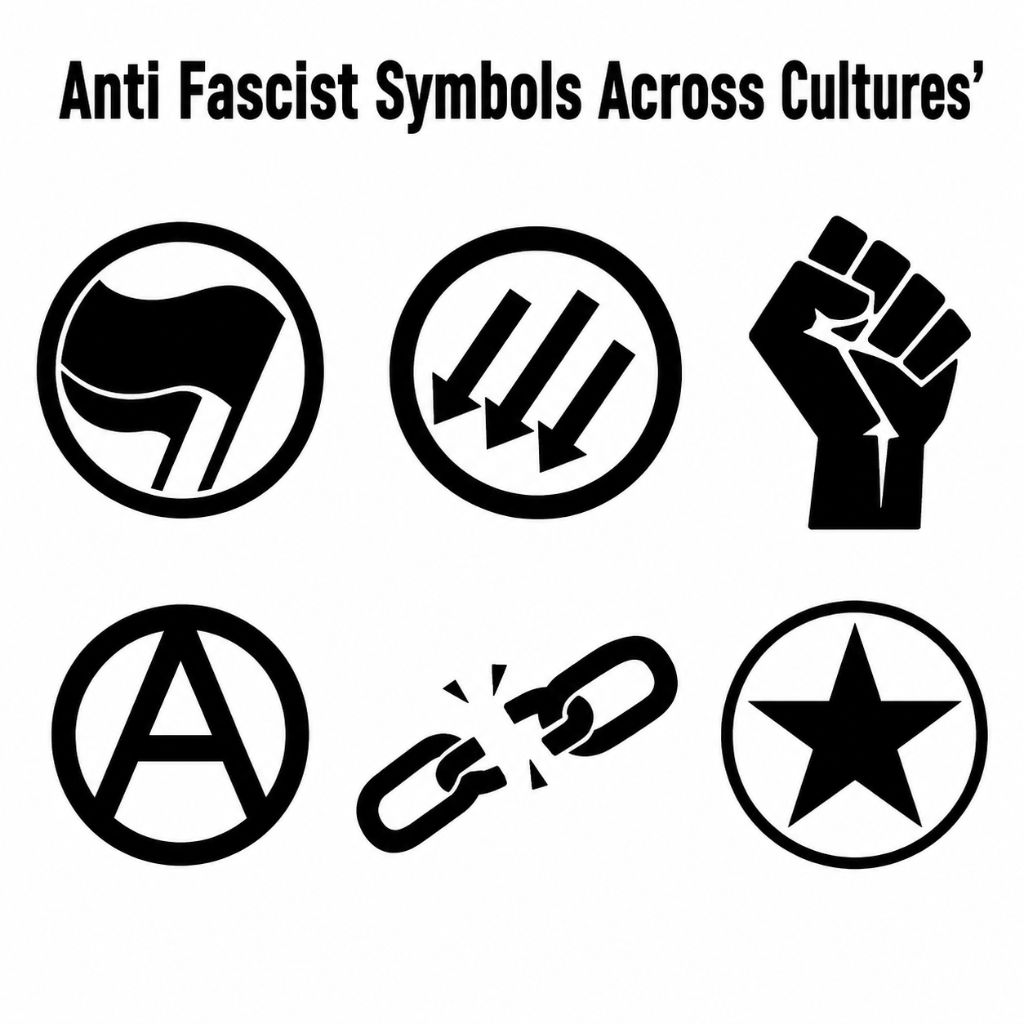
Anti fascist symbols have taken on different meanings and forms depending on the region, shaped by local history and political context.
Europe
In Europe, particularly Germany, anti fascist symbols like the Three Arrows and the red and black flag design carry strong historical weight tied directly to the resistance against Nazi rule in the 1930s. These symbols are still used in political displays and historical remembrance across the continent today.
United States
In the United States, anti fascist symbols often blend the circle A, the Three Arrows, and various flag designs, reflecting a mix of anarchist and socialist influences rather than one standardized look. American usage tends to be more decentralized compared to the more uniform European style.
Latin America
In Latin America, anti fascist symbols are frequently tied to broader anti authoritarian and pro democracy movements, often combined with local political imagery from the region’s own history of resisting dictatorships. The raised fist is especially common in this context.
Asia
In parts of Asia, anti fascist symbols appear mainly in academic and historical discussions of World War II resistance movements, as well as in occasional modern protest movements against authoritarian governance. Their usage is generally less widespread than in Europe or the Americas.
Middle East
In the Middle East, anti fascist symbols are less commonly used in mainstream political movements, though variations of resistance imagery and solidarity symbols do appear in specific activist and academic circles discussing authoritarianism and human rights.
Anti Fascist Symbols in Art, Movies and Pop Culture
Anti fascist symbols have made their way into films, documentaries, and books that explore World War II history and modern political resistance movements. Museums and historical exhibits often display original Iron Front posters and Antifaschistische Aktion materials as part of educational programming on the rise and fall of fascist regimes.
In contemporary pop culture, these symbols also appear on clothing, murals, and album artwork associated with punk and alternative music scenes that have long embraced anti authoritarian themes.
Spiritual and Dream Meaning of Anti Fascist Symbols
For some people, encountering anti fascist symbols in reflection or dream interpretation is associated with themes of standing firm against injustice or finding courage during difficult times.
A raised fist appearing symbolically may represent inner strength and the need to defend personal values, while imagery of unity, like the two flag antifa design, can suggest a call toward collective action or community support during a challenging period.
Positive vs Negative Meaning
Anti fascist symbols are viewed differently depending on political perspective and historical context, and it is worth understanding both sides.
Positive interpretations often include:
- Resistance against authoritarian rule
- Solidarity among diverse political groups
- Historical remembrance of anti Nazi resistance movements
- A stand for democratic values and human rights
Negative interpretations sometimes raised by critics include:
- Association with property damage or clashes at protests
- Concerns about symbols being used to justify violence
- Debate over whether modern usage matches the original historical intent
- Disagreement over which groups have the right to claim these symbols
Why Humans Are Attracted to This Symbol
People are drawn to anti fascist symbols because they represent a clear, historical stand against tyranny and oppression. These symbols offer a visual shorthand for complex political ideas, making it easy for individuals to express solidarity without needing lengthy explanations.
The strong historical backstory, tied to real resistance movements against Nazi Germany and other authoritarian regimes, also gives these symbols a sense of weight and legitimacy that continues to resonate with people fighting for democratic values today.
Conclusion
Anti fascist symbols carry nearly a century of history, from the Iron Front’s Three Arrows in 1930s Germany to the modern antifa flag and circle A seen at protests worldwide. These symbols represent resistance, solidarity, and a rejection of authoritarian control, though their meaning can vary depending on region and political perspective.
Understanding the history behind anti fascist symbols helps make sense of why they remain such a powerful and recognizable part of political movements around the world today.

Ethan Brooks is a writer and researcher at TechTimeGP, sharing clear and informative guides about symbols, signs, and their meanings. He explores the history, cultural significance, and modern uses of different symbols to help readers understand the stories behind them. His goal is to make symbol meanings simple, accurate, and easy for everyone to discover.