93+ Ancient Symbols and Their Meanings in History and Culture (2026)
Ancient symbols have carried meaning across thousands of years. They show up in tombs, temples, and old manuscripts. People used them to explain life, death, and the unknown. Even today, these symbols still catch our attention.
This guide looks at the most powerful ancient symbols and what they truly mean. You will learn where each symbol came from and why it mattered. We will also see how ancient symbols show up in tattoos, movies, and jewelry today. By the end, you will understand why these symbols still feel so alive in 2026.
What Are Ancient Symbols?
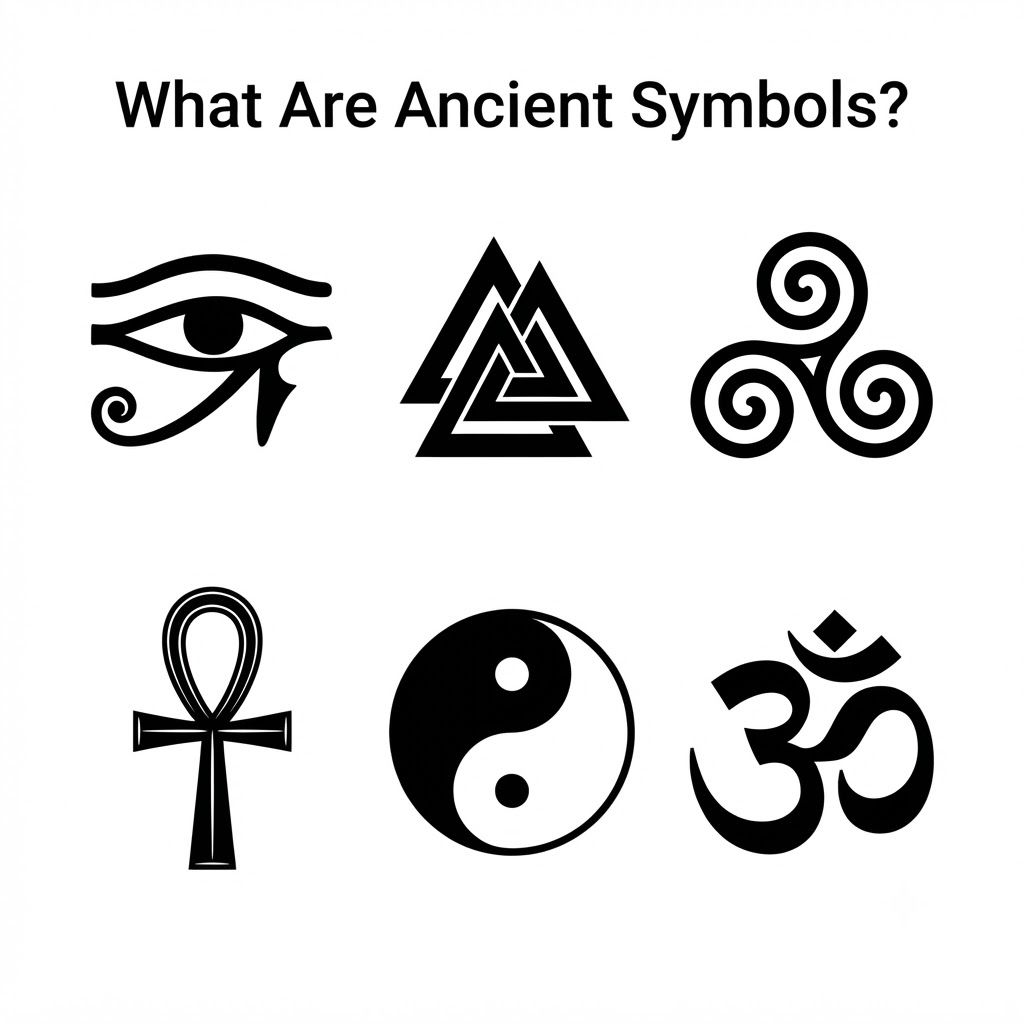
Ancient symbols are visual marks, shapes, or images that early civilizations used to represent ideas, beliefs, or forces of nature. They appeared on temple walls, jewelry, pottery, and sacred texts long before written language became common. Each symbol carried a story that was often understood without a single word.
Why Ancient Symbols Still Fascinate People
People are drawn to ancient symbols because they connect us to something older than ourselves. These symbols represent ideas like protection, life, death, and rebirth that never go out of relevance.
Many people also feel a quiet sense of mystery when looking at ancient symbols, since their true origins are sometimes lost to history.
Deep Symbolic Meaning of Ancient Symbols
Ancient symbols work on more than one level. They hold spiritual, psychological, and cultural weight, which is part of why they have survived for so long.
Spiritual Meaning
In most traditions, ancient symbols were tools for connecting with the divine or the unseen world. Priests, shamans, and spiritual leaders used them in rituals to invite protection, healing, or blessings.
Psychological Meaning
From a psychological view, ancient symbols tap into what Carl Jung called the collective unconscious. They represent shared human experiences like birth, struggle, and transformation, which is why the same shapes appear across unrelated cultures.
Cultural Meaning
Culturally, ancient symbols acted as a shared language. A symbol carved into a temple in Egypt could tell a story that everyone in that society understood instantly, without needing to read a single sentence.
Most Powerful Types of Ancient Symbols
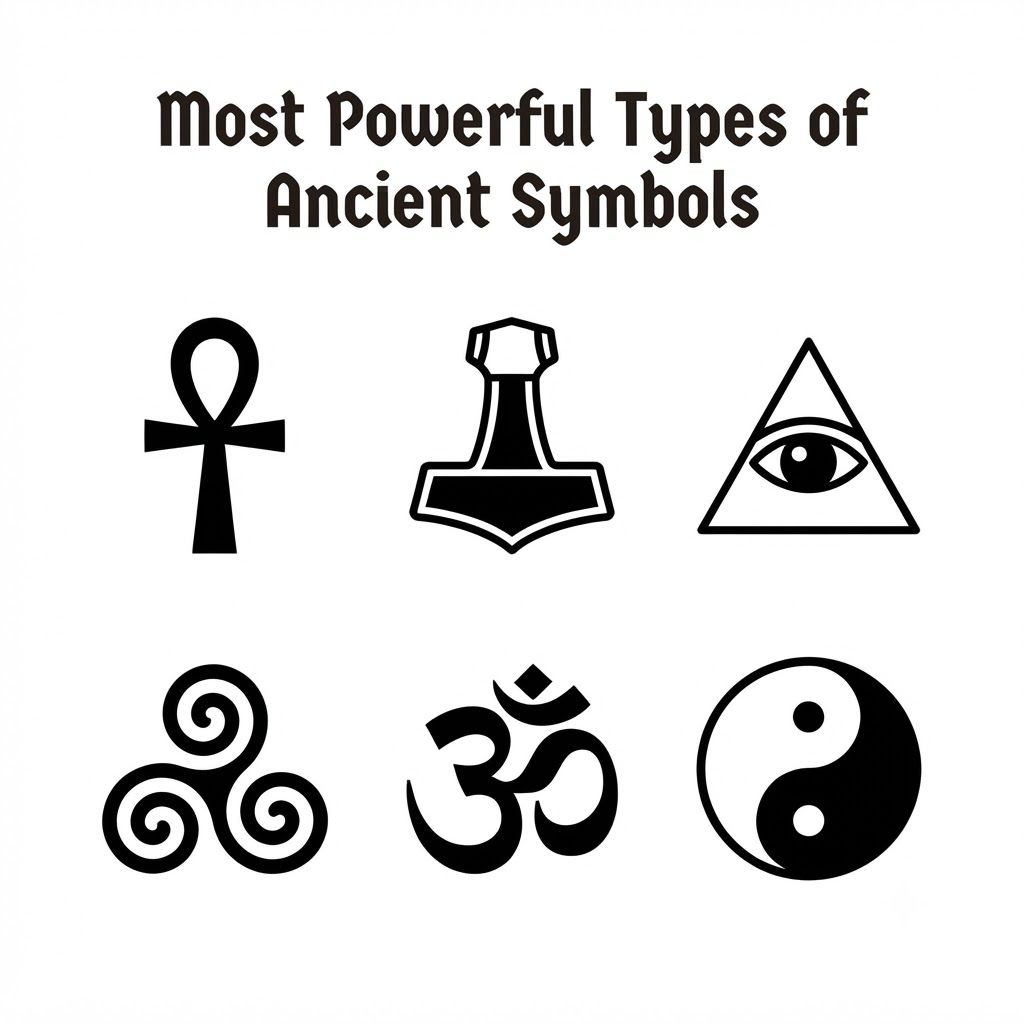
Some ancient symbols have stood out more than others because of how widely they spread and how deeply they were used. Below are six of the most powerful ancient symbols in history.
The Ankh
The ankh is one of the oldest and most recognized ancient symbols from Egypt. It is often called the key of life because of its unique shape.
Visual Description
The ankh looks like a cross topped with a loop instead of a straight edge.
Meaning
It represents eternal life and was closely tied to the idea of the soul continuing after death.
Where It Appears
The ankh appears on Egyptian tomb walls, statues of gods like Isis and Osiris, and modern jewelry.
The Eye of Horus
The Eye of Horus is one of the most protective ancient symbols in Egyptian history. It was believed to guard against harm and bring good health.
Visual Description
A stylized human eye with markings resembling a falcon’s eye below and beside it.
Meaning
It symbolizes protection, health, and royal power in ancient Egyptian belief.
Where It Appears
This ancient symbol shows up on amulets, sarcophagi, and even in modern logos inspired by Egyptian design.
The Ouroboros
The ouroboros is one of the most mysterious ancient symbols still studied today. Its circular shape makes it a strong image of endless cycles.
Visual Description
A serpent or dragon shown eating its own tail, forming a perfect circle.
Meaning
It represents the endless cycle of life, death, and rebirth, along with the idea of infinity.
Where It Appears
The ouroboros appears in Egyptian, Greek, and Norse mythology, and later in alchemical texts.
The Celtic Knot
The Celtic knot is a well known ancient symbol from Celtic culture. Its endless lines reflect deep ideas about life and connection.
Visual Description
An interwoven pattern of continuous lines with no clear beginning or end.
Meaning
It stands for eternity, unity, and the interconnected nature of life.
Where It Appears
Celtic knots decorate ancient stone carvings, illuminated manuscripts, and modern Irish jewelry.
The Lotus Flower
The lotus flower is a gentle yet powerful ancient symbol found in several cultures. It grows from mud but blooms clean, which gives it strong spiritual meaning.
Visual Description
A flower shown blooming out of muddy water, often drawn with symmetrical petals.
Meaning
It represents purity, rebirth, and spiritual awakening rising above hardship.
Where It Appears
The lotus appears in Egyptian temple art, Hindu scriptures, and Buddhist iconography.
The Tree of Life
The tree of life is one of the most widespread ancient symbols across the world. Different cultures shaped it differently, but the core meaning stayed similar.
Visual Description
A tree with roots and branches shown in equal, mirrored balance.
Meaning
It symbolizes the connection between heaven, earth, and the underworld, along with growth and family lineage.
Where It Appears
Versions of this ancient symbol appear in Norse, Celtic, Egyptian, and Kabbalistic traditions.
ALSO READ THIS BLOG: 95+ Anti Fascist Symbols: Meanings, History & Global Significance (2026)
Ancient Symbols Across Different Cultures

Ancient symbols were not limited to one region. Different civilizations developed their own versions, often with surprising overlaps in meaning.
Ancient Egypt
Egyptian ancient symbols like the ankh, scarab, and Eye of Horus were tied closely to the afterlife and divine kingship.
Ancient Greece
Greek culture used symbols like the laurel wreath and the caduceus to represent victory, healing, and communication between gods and humans.
Celtic Culture
Celtic ancient symbols such as knots and spirals reflected a worldview built around cycles, nature, and eternal connection.
Ancient China
Chinese symbols like the yin yang and the dragon represented balance, power, and harmony between opposing forces.
Hindu and Buddhist Traditions
Symbols such as the lotus, the om, and the wheel of dharma reflect spiritual growth, enlightenment, and the cycle of rebirth.
Here is a quick comparison of how these cultures approached ancient symbols:
| Culture | Key Ancient Symbol | Core Meaning |
| Egypt | Ankh | Eternal life |
| Greece | Laurel Wreath | Victory and honor |
| Celtic | Celtic Knot | Unity and eternity |
| China | Yin Yang | Balance and harmony |
| Hindu/Buddhist | Lotus | Purity and rebirth |
Ancient Symbols in Art, Movies and Pop Culture
Ancient symbols never really left popular culture. They keep resurfacing in new forms across media.
Movies
Films about Egypt, Greek mythology, and fantasy worlds regularly use ancient symbols to add mystery and depth, such as the ankh in mummy themed movies or Celtic knots in fantasy epics.
Paintings and Literature
Classic and modern artists have used ancient symbols to represent deeper themes like mortality, spirituality, and transformation in their work.
Tattoos
Ancient symbols are among the most requested tattoo designs because they combine visual beauty with deep personal meaning, especially symbols like the tree of life and the ouroboros.
Fashion and Jewelry
Designers borrow ancient symbols for necklaces, rings, and clothing prints, often blending ancient meaning with modern style.
Spiritual and Dream Meaning of Ancient Symbols
Many people report seeing ancient symbols in dreams during times of personal change. A serpent forming a circle might reflect a feeling of being stuck in a cycle, while a tree might reflect a need for grounding. These interpretations are personal and symbolic rather than scientific, but they show how deeply these ancient symbols are wired into human thinking.
Positive and Negative Meanings of Ancient Symbols
Not every ancient symbol carries only positive meaning. Some have been misused or reinterpreted in negative ways over history.
- Positive meanings often include protection, growth, unity, and rebirth.
- Negative meanings can emerge when a symbol is taken out of its original context or twisted by a group for harmful purposes.
- Context always matters more than the shape itself when reading the meaning of an ancient symbol.
Why Humans Feel Deeply Connected to Ancient Symbols
People connect with ancient symbols because they represent universal human experiences that do not change with time, such as birth, death, love, and struggle. Seeing a symbol used by people thousands of years ago creates a quiet sense of shared humanity across time.
Ancient Symbols and Sacred Geometry
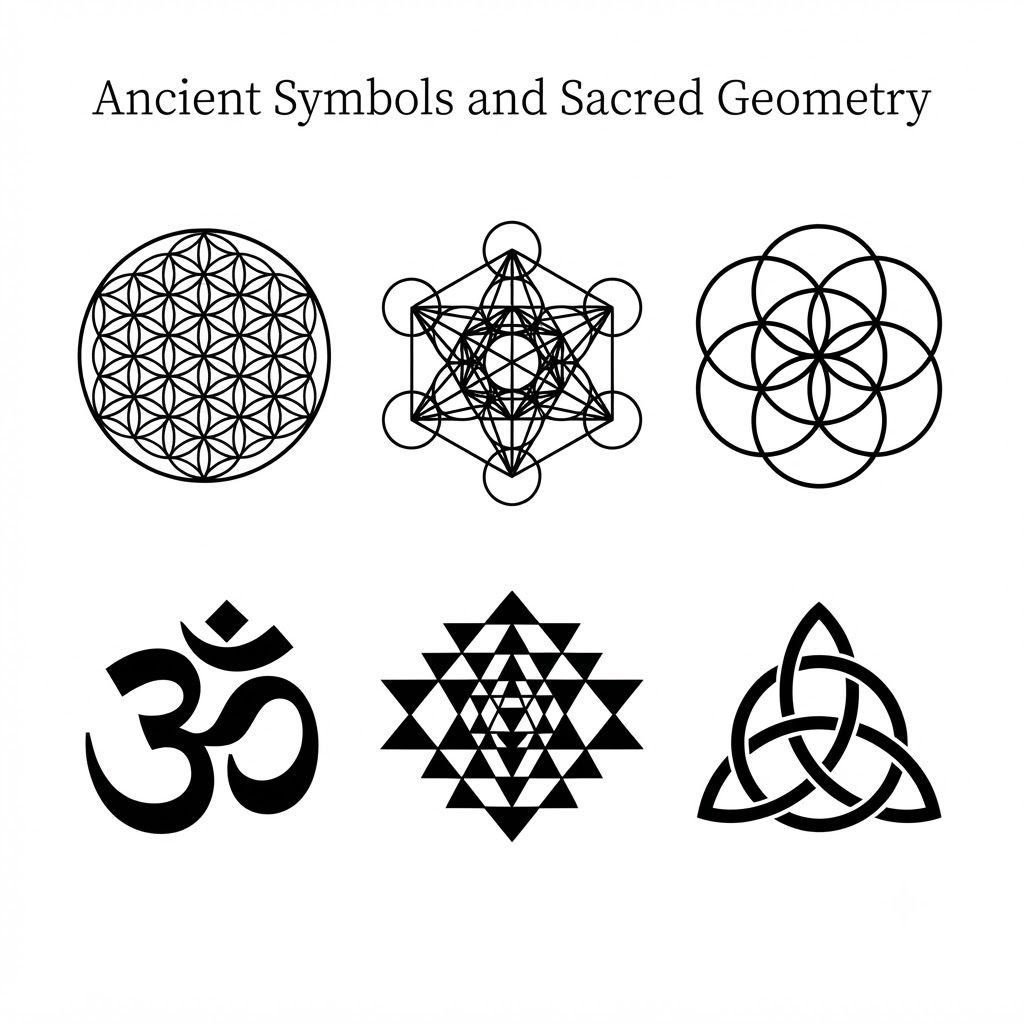
Many ancient symbols are built on sacred geometry, using shapes like circles, triangles, and spirals believed to reflect the natural order of the universe. The Flower of Life and the Seed of Life are strong examples, often linked to creation and balance in nature.
Are Ancient Symbols Still Relevant Today?
Ancient symbols remain highly relevant in 2026, showing up in tattoos, brand logos, spiritual practices, and design trends. Their lasting relevance comes from the fact that they represent ideas people still care about, like protection, identity, and meaning in life.
Conclusion
Ancient symbols carry centuries of history in a single image. The ankh, the lotus, and the Celtic knot each tell their own story. These stories have outlived empires and languages. That is why they still matter to us today.
Looking at these symbols gives us a small window into the past. We get a glimpse of how ancient people saw life and death. We also see how they made sense of the world around them. Their meaning still resonates, even in 2026.